FreeRTOS is a real-time, open-source operating system originally developed in 2003 for embedded systems. It is widely used in small-scale, low-power devices, especially in microcontroller-based architectures. FreeRTOS provides core RTOS capabilities including task scheduling, interrupt management, and resource control, while requiring only 4–9 KB of RAM, which makes it ideal for resource-constrained embedded applications without sacrificing deterministic performance. It is heavily adopted in IoT (Internet of Things) ecosystems and industrial automation frameworks, and thanks to its permissive open-source licensing model, it offers full customization flexibility, delivering a scalable, cost-free RTOS environment for embedded developers.
FreeRTOS is backed by a large global community and supports more than 40 microcontroller architectures, enabling concurrent task execution even on limited hardware resources. This allows single-core MCUs to achieve multi-core-like efficiency using context switching. Its modular kernel architecture ensures structured system design even in complex embedded workflows, supporting cross-domain embedded innovation.
Getting Started with FreeRTOS
Although FreeRTOS requires foundational low-level hardware knowledge, its extensive official documentation ensures rapid onboarding and short learning curves. To begin, developers must set up an embedded development environment and integrate the official FreeRTOS source code into an IDE (Integrated Development Environment) such as STM32CubeIDE, Keil MDK, ESP-IDF, or other embedded toolchains.
For strong RTOS-hardware compatibility, microcontrollers like STM32 and ESP32 are commonly recommended due to their mature FreeRTOS support in firmware ecosystems. FreeRTOS APIs and libraries allow developers to create tasks, queues, semaphores, and inter-task communication pipelines. Tasks are instantiated using the xTaskCreate() API, where parameters such as task function name, stack size, priority level, and input arguments are defined. Once compiled, firmware can be flashed to the MCU and monitored in real-time using serial output, debugger logs, or RTOS tracing tools.
Key system timing parameters such as tick rate and task priorities are configured in the FreeRTOSConfig.h file using settings like configTICK_RATE_HZ. Since FreeRTOS supports low-power sleep modes, it is also suitable for energy-efficient embedded system designs.
Task Design in FreeRTOS
In FreeRTOS, tasks are independent execution threads, each responsible for a dedicated embedded function. Implementing tasks correctly is a fundamental RTOS skill. Each task must run inside an infinite loop, typically implemented using while(1) or for(;;), because FreeRTOS will automatically terminate tasks if the loop exits.
To yield CPU time and avoid busy-waiting, developers commonly use vTaskDelay(pdMS_TO_TICKS(500)) to suspend a task for 500 ms, improving CPU utilization and enabling the scheduler to allocate processing time to other active tasks. Task priorities are assigned between 0 and configMAX_PRIORITIES-1, and stack size must be sized correctly to prevent stack overflow or heap fragmentation risks, especially in high-frequency or ISR-heavy designs.
Inter-task communication and synchronization are implemented using RTOS-safe APIs including xQueueSend(), xQueueReceive(), xSemaphoreGive(), and xSemaphoreTake(), ensuring deterministic and synchronized data flow between embedded modules. Lifecycle control APIs such as vTaskSuspend() and vTaskDelete() help manage task states efficiently in complex embedded application designs.
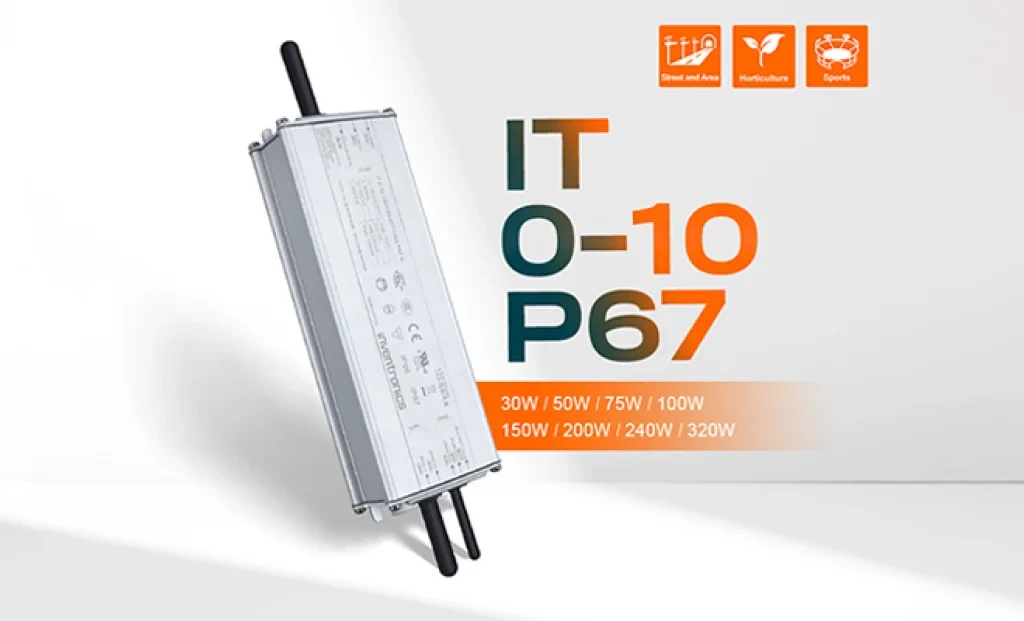
Inventronics has announced two new additions to its outdoor LED driver portfolio: the 150W IT 0-10 150/100-277 P67 and the 240W IT 0-10 240/100-277 P67 programmable drivers. With this new series, the company aims to establish a new benchmark in street and area lighting in terms of performance, efficiency, and durability.
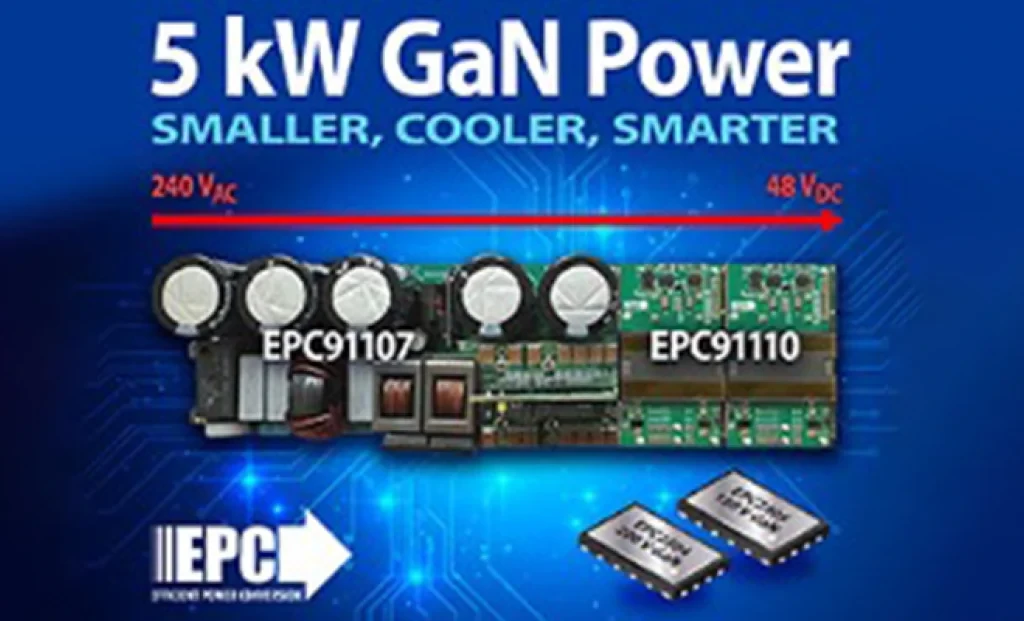
5 kW GaN-Based AC/DC Reference Design from EPC for AI Servers and Data Centers EL SEGUNDO, California — October 2025 — Efficient Power Conversion Corporation (EPC), the world leader in enhancement-mode gallium nitride (eGaN®) power devices, has announced a high-efficiency, high-power-density 5 kW AC-to-48 V DC GaN reference design developed to meet the demands of AI servers and next-generation data center power architectures.
Sensirion has officially announced its next-generation SEN65 and SEN63C sensor platforms, designed to make indoor air quality measurement easier and more accurate than ever before. In addition, the SEK-SEN63C evaluation kit is now available for purchase, enabling developers and system integrators to quickly test and evaluate the new sensor family. Initial orders can be placed immediately.
The long-awaited beta release of Vitis AI 5.1 from AMD has been announced, marking the beginning of a major architectural shift that significantly advances edge AI inference capabilities.
With 44 years of experience, Empa Elektronik, a trusted and pioneering company in the electronic components industry, is set to make transformative investments in the technology ecosystem through its collaboration with Fark Labs, a global innovation and transformation center.
In a comparative study of Auto-ML platforms designed to simplify edge AI deployment, NanoEdge AI Studio and Edge Impulse emerged as leading solutions [1]. The comparison was conducted using multi-sensor biomedical data applied to predictive maintenance use cases.
In shopping malls, galleries, and large-scale commercial spaces, the stability and intelligence of lighting systems are among the most critical factors directly influencing user experience.
 EN − TL
 Türkçe