Industrial automation requires precise, contactless, and non-mechanical metal-object detection. In modern factories—especially in automotive production lines, robotics cells, and automated manufacturing—detecting the position of metal rods, metal enclosures, caps, or mechanical parts without physical contact is critical for speed, accuracy, and reliability.
Devices built to perform this task by generating and monitoring a magnetic field using electromagnetic induction are called inductive proximity sensors (inductive sensors). These sensors operate without touch, work repeatedly with high accuracy, and provide strong environmental resistance even under harsh industrial conditions.
What Does an Inductive Sensor Do?
In manufacturing, it is essential to know whether a metal part is present, moving, or positioned correctly. Inductive sensors detect this without physical contact. For example, they can verify whether a metal cover, cap, or lid has arrived on a conveyor, validate a component’s position, or measure rotational and linear movement frequencies in metal-based mechanical assemblies.
As a result, inductive-sensor-based detection:
Speeds up operations
Improves system reliability
Reduces mechanical wear (since there is no physical friction)
Lowers maintenance and replacement costs
Enables long-term stable operation
Key Features of Inductive Sensors
Inductive sensors are available in multiple sizes, most commonly in cylindrical or threaded form factors such as M5, M8, M12, M18, and M30, but also in rectangular or flat-housing variants depending on the mounting area and application constraints. Detection ranges vary depending on sensor size, typically between 1 mm and 50 mm, and response speeds allow reliable detection in high-frequency motion or fast conveyor transitions.
Additional technical characteristics include:
Ingress protection class: IP67, enabling resistance to water, oil, dust, dirt, and contaminants
High repeatability and fast response, suitable for real-time automation feedback
No physical contact, preventing sensor or target surface wear
24 VDC typical supply voltage
Industrial digital output options: NPN, PNP, Normally Open (NO), Normally Closed (NC)
How Does an Inductive Sensor Work?
The working principle of inductive sensors is based on electromagnetic oscillation and magnetic-field disturbance detection:
The internal coil generates a magnetic field when energized.
When a metal object enters this field, eddy currents form on the object’s surface.
These currents create a magnetic-field change/disturbance.
The sensor detects this disturbance and converts it into an electrical digital signal.
The output stage sends this signal to the control system, PLC, or motion controller.
The sensor architecture typically consists of:
Oscillation (magnetic-field generation) stage
Signal-evaluation stage (detects oscillation change)
Output stage (delivers detection result digitally)
Where Are Inductive Sensors Used?
Inductive sensors are widely used in:
Automotive factories to monitor and verify metal components and production tooling
Robotic arms and drive systems for position verification and stable motion-control feedback
Packaging lines to detect metal caps, containers, and enclosures
Logistics systems for metal-box or metal-container detection
Railway, aerospace, medical, and defense systems for speed, position, and component-presence detection
Display systems (in some industrial terminals) for light-level-dependent switching (LDR is not inductive; it is analog photo-resistive, not magnetic-inductive)
How to Select the Right Inductive Sensor for a Project
Sensor selection must match:
Detection distance requirement
Target metal type
Output protocol (NPN/PNP, NO/NC)
Mounting space and method
System response frequency
General guidance:
M5: 1–2 mm detection range
M30: 15–20 mm typical detection range
Aluminum and stainless steel can be detected, but detection distance decreases vs. mild steel due to material correction factors
For fast-moving targets, choose high-response-frequency sensors
Common Industry Findings (Material Behavior Notes)
Stainless steel is detectable, but distance is shorter than mild steel
Aluminum is detectable (conductive), but range is ~30–40% shorter vs. mild steel
Inductive sensors are highly durable due to IP67 and frictionless operation, but may fail if:
Installed incorrectly
Exposed to strong EMI noise
Hit physically
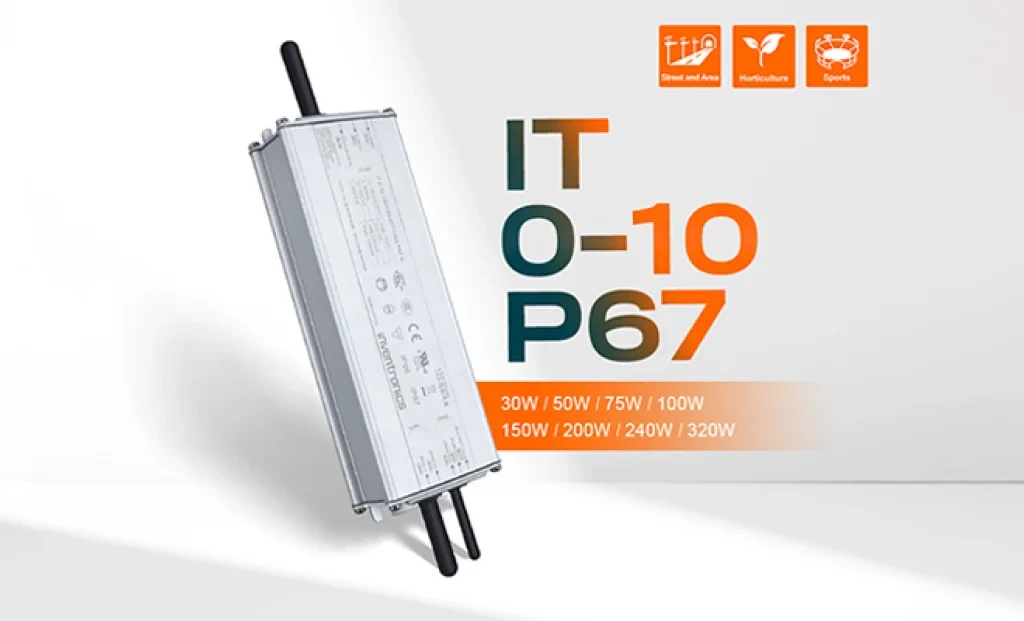
Inventronics has announced two new additions to its outdoor LED driver portfolio: the 150W IT 0-10 150/100-277 P67 and the 240W IT 0-10 240/100-277 P67 programmable drivers. With this new series, the company aims to establish a new benchmark in street and area lighting in terms of performance, efficiency, and durability.
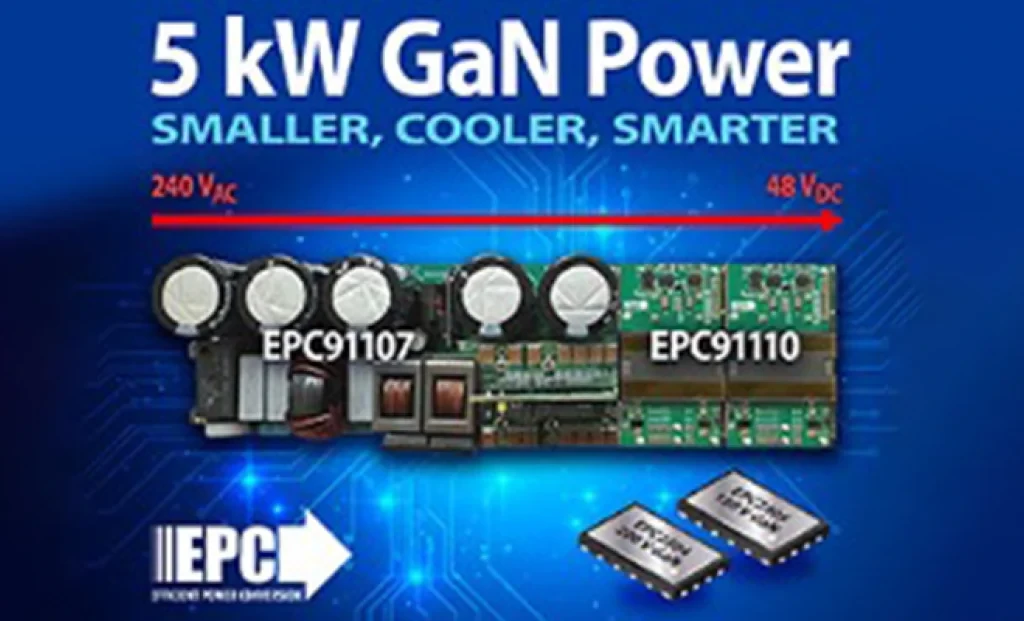
5 kW GaN-Based AC/DC Reference Design from EPC for AI Servers and Data Centers EL SEGUNDO, California — October 2025 — Efficient Power Conversion Corporation (EPC), the world leader in enhancement-mode gallium nitride (eGaN®) power devices, has announced a high-efficiency, high-power-density 5 kW AC-to-48 V DC GaN reference design developed to meet the demands of AI servers and next-generation data center power architectures.
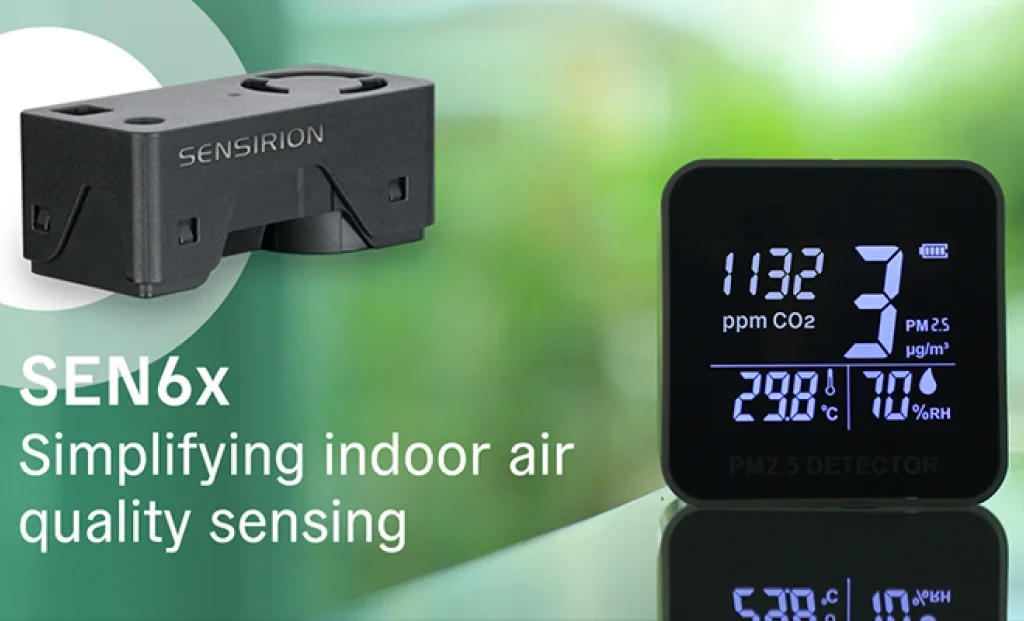
Sensirion has officially announced its next-generation SEN65 and SEN63C sensor platforms, designed to make indoor air quality measurement easier and more accurate than ever before. In addition, the SEK-SEN63C evaluation kit is now available for purchase, enabling developers and system integrators to quickly test and evaluate the new sensor family. Initial orders can be placed immediately.
The long-awaited beta release of Vitis AI 5.1 from AMD has been announced, marking the beginning of a major architectural shift that significantly advances edge AI inference capabilities.
With 44 years of experience, Empa Elektronik, a trusted and pioneering company in the electronic components industry, is set to make transformative investments in the technology ecosystem through its collaboration with Fark Labs, a global innovation and transformation center.
In a comparative study of Auto-ML platforms designed to simplify edge AI deployment, NanoEdge AI Studio and Edge Impulse emerged as leading solutions [1]. The comparison was conducted using multi-sensor biomedical data applied to predictive maintenance use cases.
In shopping malls, galleries, and large-scale commercial spaces, the stability and intelligence of lighting systems are among the most critical factors directly influencing user experience.
 EN − TL
 Türkçe