An AVOmeter is a measurement device equipped with various sensors that measures electrical parameters such as resistance, current, voltage, frequency, and short circuit. Because it can measure multiple values, the device is also referred to as a multimeter, and both analog and digital models are available. The AVOmeter symbol varies depending on the parameter being measured. For example, the symbol is "Ω" for resistance, "V" for voltage, and "A" for current. Designed for use by almost anyone, these multifunctional measuring instruments are small enough to carry even in a pocket. You can find further details about AVOmeters in the rest of the content.
What Does an AVOmeter Do?
AVOmeters can perform the functions of an ammeter, voltmeter, and ohmmeter on their own, and are used for fault detection and performance evaluation in electrical circuits. The device is designed to measure many parameters, especially current, without requiring a separate instrument for each measurement. In addition, some AVOmeter models include extra features such as diode testing and continuity control. You can use AVOmeters for circuit analysis, project development, and inspection processes.
Types of AVOmeters
AVOmeters are divided into analog and digital based on their operating principle, each offering different advantages:
Analog AVOmeter models feature a needle indicator display and adjustment dials located below the screen. These devices use a traditional moving-coil structure, are low-cost, and easy to use. They require manual calibration and must be reset to zero before each measurement. Their most important advantage is being minimally affected by electrical noise.
Digital AVOmeter models operate with electrical energy and perform automatic measurements. They can measure more parameters, store measurement results, or send data to software and other systems. Some models can be integrated into energy management systems.
What Can Be Measured with an AVOmeter?
Traditional AVOmeters measure current, voltage, and resistance. New-generation digital AVOmeters can also measure watt, inductance, capacitance, grounding, short circuit, and even detect transistor terminals. Some digital models can also measure temperature.
How to Use an AVOmeter
Regardless of the type, AVOmeters are practical devices, but correct usage may vary by model. For accurate operation, it is recommended to consult the user manual provided with the device. The basic steps are:
Select the correct measurement mode using the adjustment dial (analog) or buttons (digital).
Connect the red probe to the positive input and the black probe to the negative input.
Read the measurement result on the display after properly connecting the probes.
When using an AVOmeter, it is important that the value being measured does not exceed the device’s maximum capacity, otherwise accurate results cannot be obtained.
How to Connect an AVOmeter
Probes must be connected differently depending on the parameter:
For voltage measurement, probes must be connected in parallel to the circuit (red = positive, black = negative).
For current measurement, the device must be connected in series, and the current must be cut before connecting.
For grounding measurement, connect the device to the grounding electrode.
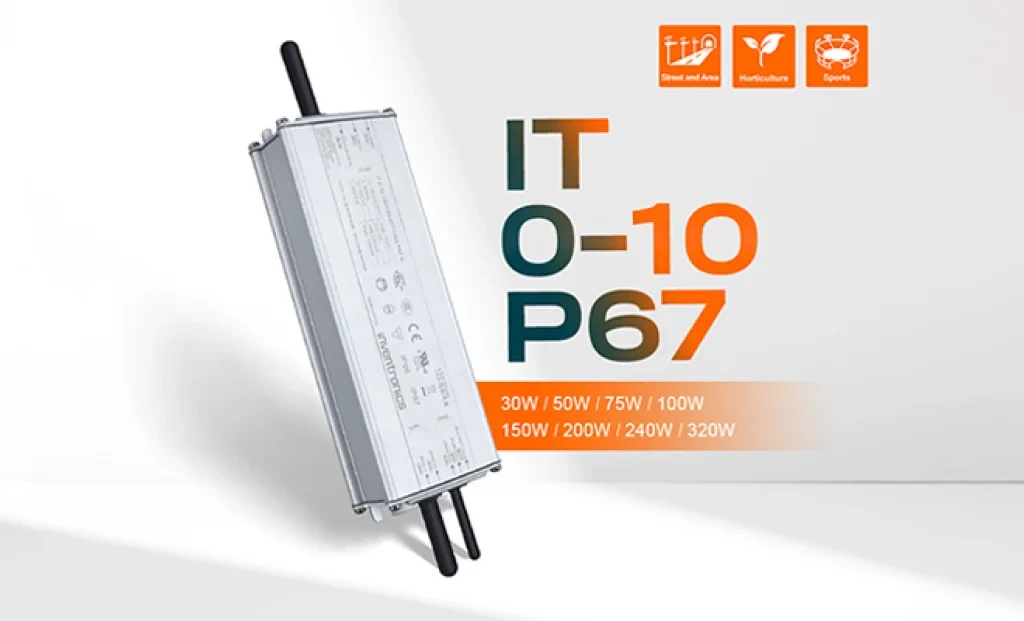
Inventronics has announced two new additions to its outdoor LED driver portfolio: the 150W IT 0-10 150/100-277 P67 and the 240W IT 0-10 240/100-277 P67 programmable drivers. With this new series, the company aims to establish a new benchmark in street and area lighting in terms of performance, efficiency, and durability.
5 kW GaN-Based AC/DC Reference Design from EPC for AI Servers and Data Centers EL SEGUNDO, California — October 2025 — Efficient Power Conversion Corporation (EPC), the world leader in enhancement-mode gallium nitride (eGaN®) power devices, has announced a high-efficiency, high-power-density 5 kW AC-to-48 V DC GaN reference design developed to meet the demands of AI servers and next-generation data center power architectures.
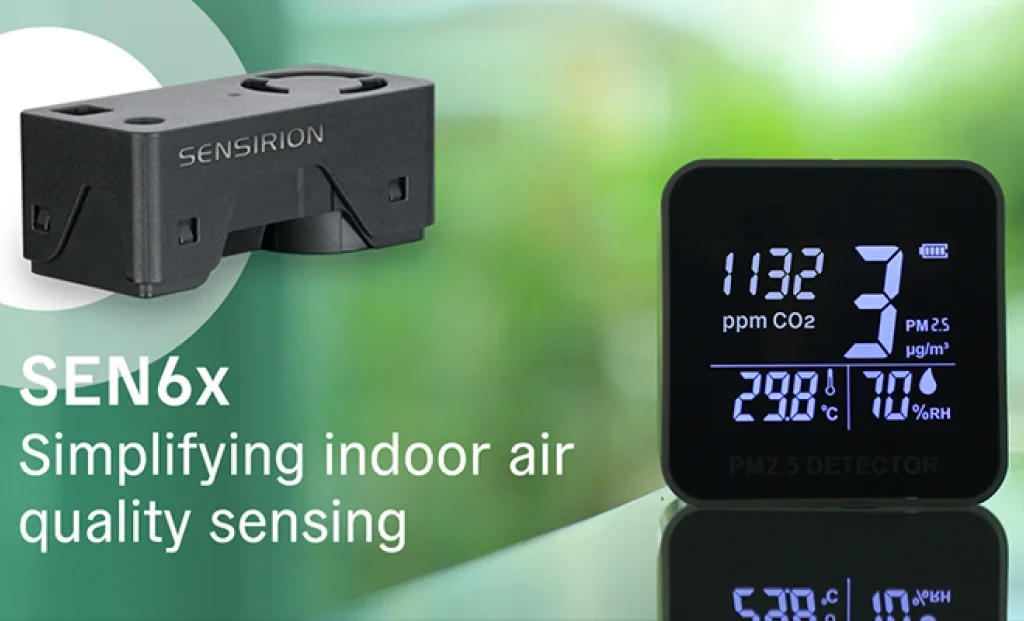
Sensirion has officially announced its next-generation SEN65 and SEN63C sensor platforms, designed to make indoor air quality measurement easier and more accurate than ever before. In addition, the SEK-SEN63C evaluation kit is now available for purchase, enabling developers and system integrators to quickly test and evaluate the new sensor family. Initial orders can be placed immediately.
The long-awaited beta release of Vitis AI 5.1 from AMD has been announced, marking the beginning of a major architectural shift that significantly advances edge AI inference capabilities.
With 44 years of experience, Empa Elektronik, a trusted and pioneering company in the electronic components industry, is set to make transformative investments in the technology ecosystem through its collaboration with Fark Labs, a global innovation and transformation center.
In a comparative study of Auto-ML platforms designed to simplify edge AI deployment, NanoEdge AI Studio and Edge Impulse emerged as leading solutions [1]. The comparison was conducted using multi-sensor biomedical data applied to predictive maintenance use cases.
In shopping malls, galleries, and large-scale commercial spaces, the stability and intelligence of lighting systems are among the most critical factors directly influencing user experience.
 EN − TL
 Türkçe