A gyroscope is a device that measures angular velocity and orientation. First discovered in the 19th century, the gyroscope operates based on the principle of angular momentum, which allows a rotating mass to maintain its direction relative to Earth’s axis. A gyroscope module consists of a rotating rotor and gimbals, and is available in both mechanical and electronic forms. Gyroscopes are used in many areas of daily life, from wearable technology to communication devices, ships, and aircraft. One of the most well-known application areas is smartphones, where a gyroscope sensor enables the screen to automatically switch between portrait and landscape mode. You can find more details about gyroscopes in the rest of the content.
What Does a Gyroscope Do?
A gyroscope sensor detects the movement and rotational direction of an object by utilizing the angular momentum of a mass rotating around a fixed axis. It determines the rotation direction and tilt angle of the device it is embedded in, providing balance and more accurate navigation data. For example, gyroscopes are used for direction finding in aircraft, screen-orientation control in smartphones, motion tracking for gaming, and head-movement detection in VR (virtual reality) devices. Due to their fast response, gyroscopes serve as reliable assistants in dynamic environments.
Types of Gyroscopes
Gyroscopes are produced in various types such as mechanical, MEMS, fiber-optic (FOG), laser (RLG), quantum, and others, each serving different application domains:
Mechanical gyroscopes are durable but heavy, consisting of a rotating disk and rotor, and are commonly used in ships and older aircraft.
MEMS gyroscopes use micro-electromechanical systems and include vibrating micro-modules. They are compact, lightweight, energy-efficient, and widely used in smartphones, smartwatches, and fitness wearables.
FOG (Fiber-Optic Gyroscopes) measure the motion of light beams and are used in spacecraft.
RLG (Ring Laser Gyroscopes) use laser beams for measurement and are utilized in aviation due to their high data accuracy.
Quantum gyroscopes are designed for ultra-high-precision measurements.
What Does a Gyroscope Measure?
A gyroscope measures the rotation speed (angular velocity) and orientation of an object. With three-axis gyroscope sensors, 3D motion and rotation can be detected in a spatial coordinate system.
How Does a Gyroscope Work?
Gyroscopes operate according to the law of conservation of angular momentum. In mechanical gyroscopes, rotation is produced by a rotor, while in MEMS-based gyroscopes, motion sensing is achieved through vibrating micro-modules.
Where Are Gyroscopes Used?
Gyroscopes are applied across a broad range of industries where motion and orientation detection are critical, including:
Smartphones, tablets, and smartwatches for screen-orientation control
Aircraft, satellites, and rockets for navigation
Automotive systems for stability control and autonomous driving (L2/L3)
Drones for flight stabilization and maneuvering
VR headsets for realistic head-motion tracking
Ships for stabilization and directional control
Advantages of Gyroscopes
Gyroscope modules provide benefits such as precise measurement, compact design, energy efficiency, versatility, and fast response. In particular, MEMS gyroscopes offer space savings and low power consumption, making them suitable for battery-powered and size-constrained embedded AIoT/IoT designs.
Disadvantages of Gyroscopes
Gyroscope limitations may vary depending on the type:
Mechanical gyroscopes require more maintenance
MEMS gyroscopes may produce drift (sensor drift) in long-term measurements, potentially causing inaccurate navigation data. This can be mitigated using digital filters.
External vibrations may interfere with measurements; this can be addressed using vibration-isolation methods.
Despite these limitations, gyroscopes remain highly practical devices in modern systems.
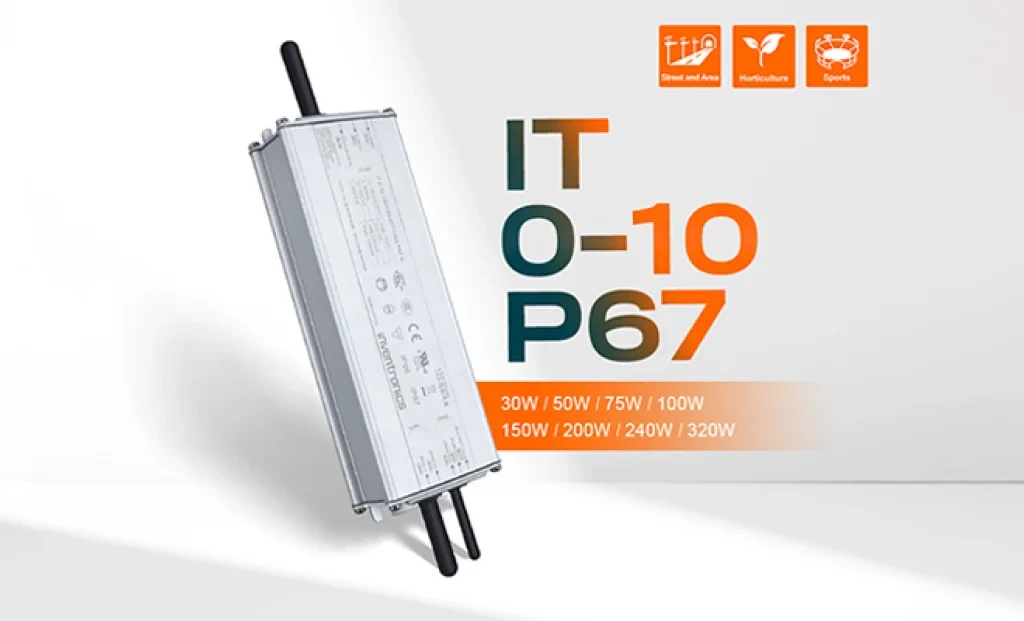
Inventronics has announced two new additions to its outdoor LED driver portfolio: the 150W IT 0-10 150/100-277 P67 and the 240W IT 0-10 240/100-277 P67 programmable drivers. With this new series, the company aims to establish a new benchmark in street and area lighting in terms of performance, efficiency, and durability.
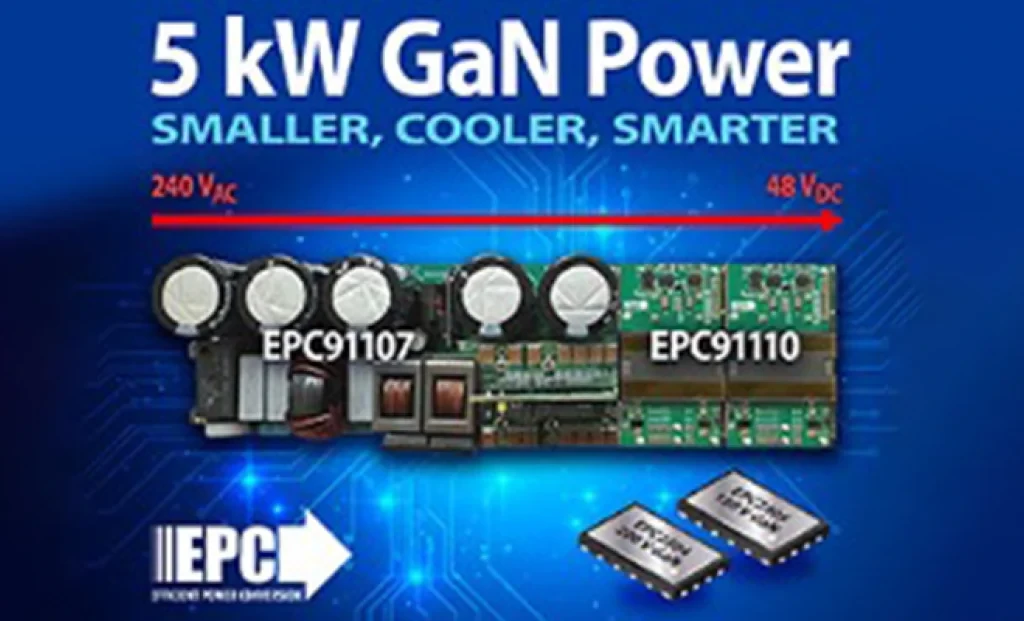
5 kW GaN-Based AC/DC Reference Design from EPC for AI Servers and Data Centers EL SEGUNDO, California — October 2025 — Efficient Power Conversion Corporation (EPC), the world leader in enhancement-mode gallium nitride (eGaN®) power devices, has announced a high-efficiency, high-power-density 5 kW AC-to-48 V DC GaN reference design developed to meet the demands of AI servers and next-generation data center power architectures.
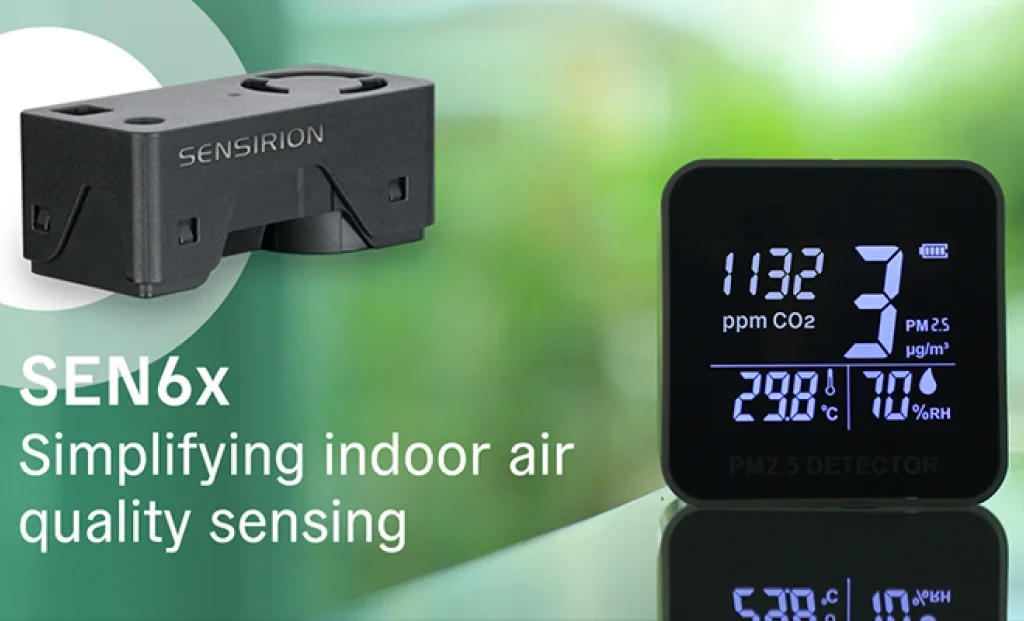
Sensirion has officially announced its next-generation SEN65 and SEN63C sensor platforms, designed to make indoor air quality measurement easier and more accurate than ever before. In addition, the SEK-SEN63C evaluation kit is now available for purchase, enabling developers and system integrators to quickly test and evaluate the new sensor family. Initial orders can be placed immediately.
The long-awaited beta release of Vitis AI 5.1 from AMD has been announced, marking the beginning of a major architectural shift that significantly advances edge AI inference capabilities.
With 44 years of experience, Empa Elektronik, a trusted and pioneering company in the electronic components industry, is set to make transformative investments in the technology ecosystem through its collaboration with Fark Labs, a global innovation and transformation center.
In a comparative study of Auto-ML platforms designed to simplify edge AI deployment, NanoEdge AI Studio and Edge Impulse emerged as leading solutions [1]. The comparison was conducted using multi-sensor biomedical data applied to predictive maintenance use cases.
In shopping malls, galleries, and large-scale commercial spaces, the stability and intelligence of lighting systems are among the most critical factors directly influencing user experience.
 EN − TL
 Türkçe