A Tesla Coil is a high-voltage, low-current, high-frequency AC transformer invented by Nikola Tesla in the late 19th century. Its primary purpose is to generate extremely high electrical potentials by using electromagnetic induction between a primary and a secondary coil. The system operates by sending pulsed or oscillating current into the primary coil, creating a rapidly changing magnetic field, which induces energy into the secondary coil. The energy accumulates at the top terminal, often a toroid, and discharges into the air as visible arcs or plasma-like electrical effects.
Tesla coils are widely used today in education, scientific demonstrations, artistic installations, wireless energy experiments, and high-frequency electromagnetic research. They are suitable for controlled lab environments and public science shows because they operate silently, switch rapidly, and create dramatic electrical discharges for visualization. In his original designs, Tesla envisioned transmitting large energy wirelessly, which later inspired concepts such as resonant inductive coupling and early theoretical foundations of wireless power transfer, although Tesla coils themselves are not primary power sources—they require external input power to operate.
A typical Tesla coil consists of:
Primary coil: thick wire, few turns, receives input power
Secondary coil: thin magnet wire, many turns, generates high voltage
Capacitors (condensers): form an LC tank circuit for resonance
Switching element: spark gap, MOSFETs, or IGBTs depending on design
Ferrite/iron core: optional, depending on topology
Top terminal: toroid or sphere to control electric field distribution
Due to very high voltage potentials, Tesla coils present serious electrical hazards. Thermal stress, semiconductor breakdown, and insulation failure are common design limits when operated beyond ratings. Safe operation requires proper isolation, grounding, insulation spacing, and personal protective equipment.
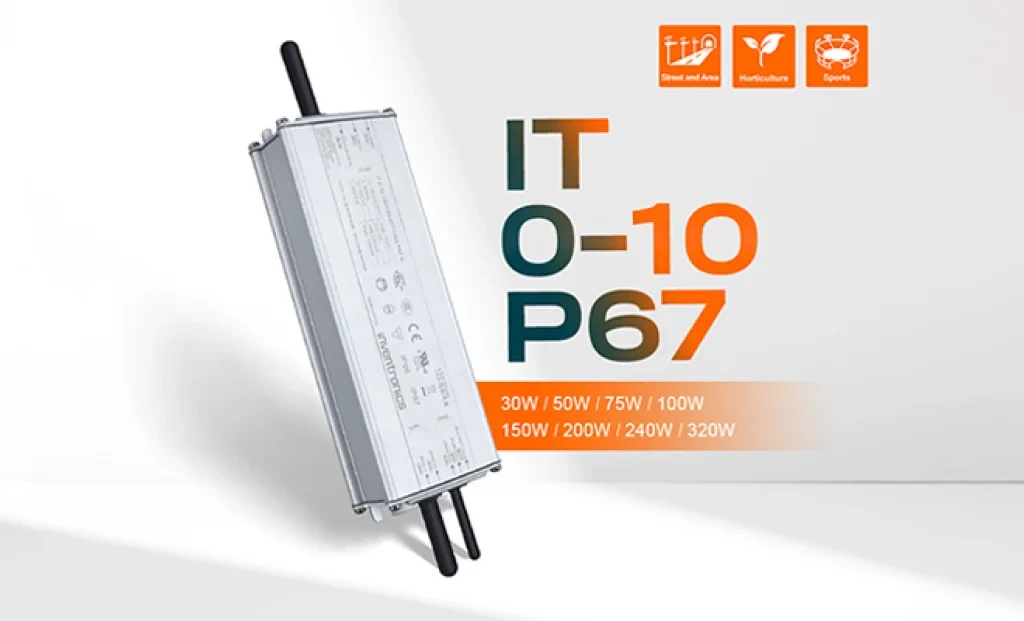
Inventronics has announced two new additions to its outdoor LED driver portfolio: the 150W IT 0-10 150/100-277 P67 and the 240W IT 0-10 240/100-277 P67 programmable drivers. With this new series, the company aims to establish a new benchmark in street and area lighting in terms of performance, efficiency, and durability.
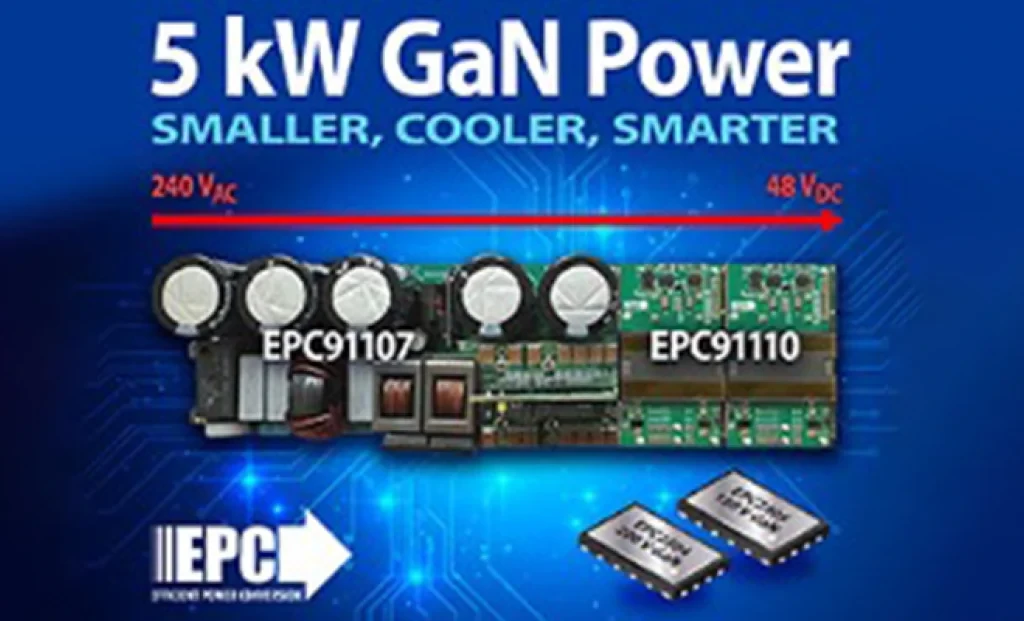
5 kW GaN-Based AC/DC Reference Design from EPC for AI Servers and Data Centers EL SEGUNDO, California — October 2025 — Efficient Power Conversion Corporation (EPC), the world leader in enhancement-mode gallium nitride (eGaN®) power devices, has announced a high-efficiency, high-power-density 5 kW AC-to-48 V DC GaN reference design developed to meet the demands of AI servers and next-generation data center power architectures.
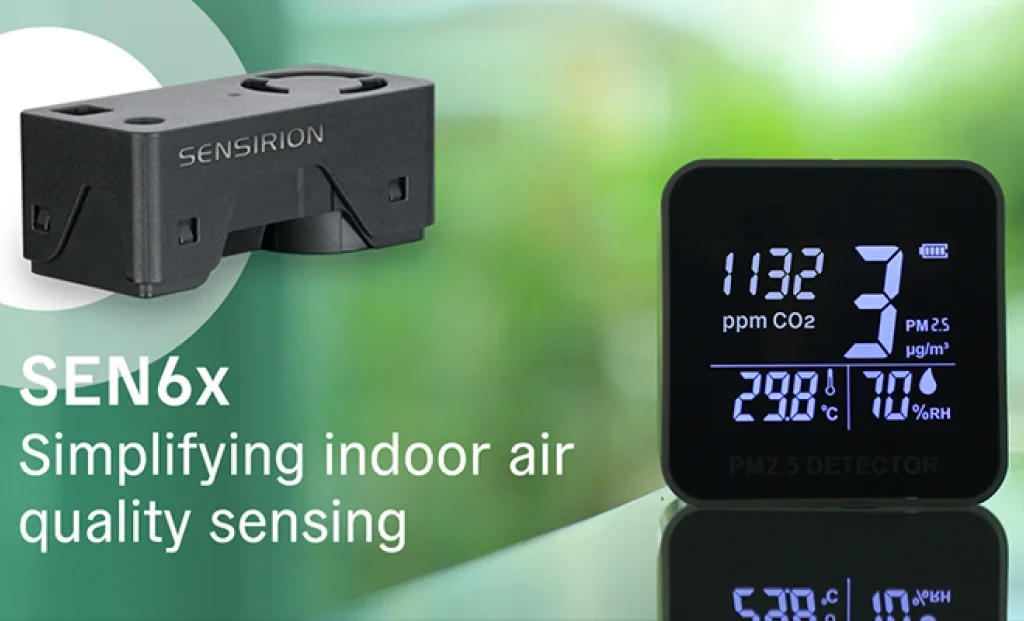
Sensirion has officially announced its next-generation SEN65 and SEN63C sensor platforms, designed to make indoor air quality measurement easier and more accurate than ever before. In addition, the SEK-SEN63C evaluation kit is now available for purchase, enabling developers and system integrators to quickly test and evaluate the new sensor family. Initial orders can be placed immediately.
The long-awaited beta release of Vitis AI 5.1 from AMD has been announced, marking the beginning of a major architectural shift that significantly advances edge AI inference capabilities.
With 44 years of experience, Empa Elektronik, a trusted and pioneering company in the electronic components industry, is set to make transformative investments in the technology ecosystem through its collaboration with Fark Labs, a global innovation and transformation center.
In a comparative study of Auto-ML platforms designed to simplify edge AI deployment, NanoEdge AI Studio and Edge Impulse emerged as leading solutions [1]. The comparison was conducted using multi-sensor biomedical data applied to predictive maintenance use cases.
In shopping malls, galleries, and large-scale commercial spaces, the stability and intelligence of lighting systems are among the most critical factors directly influencing user experience.
 EN − TL
 Türkçe