Relays, originally developed in the 1800s for telegraph systems to carry electrical current over long distances, are electrically controlled switching devices used to open or close current flow in a circuit when triggered by specific conditions.
Although electromechanical relays are widely used and practical, they can be insufficient under certain conditions. Invented in 1971, the Solid State Relay (SSR) — known in Turkish as katı hal rölesi — differs significantly from electromechanical relays, primarily because it contains no moving mechanical parts. Below are the essential technical details.
What Does an SSR Do?
Solid state relays are externally controlled switching components that operate using a low-voltage input signal to regulate high-power circuits, similar to electromechanical relays. Despite performing the same core function, they provide several advantages due to their fully non-mechanical architecture.
SSR devices consist of two electrically isolated circuits (input/control side and load/output side). The input voltage powers an internal LED, and the generated photons are detected by a photodiode or optical sensor, completing the load circuit. This design ensures full galvanic isolation, enabling the control and load circuits to operate at different voltage levels (AC or DC) without physical electrical contact.
How Does an SSR Work?
The key difference between SSR and electromechanical relays lies in the switching mechanism:
No mechanical switch exists inside an SSR.
Switching is performed using an opto-isolator (opto-coupler).
The control signal activates an internal LED.
The emitted light is sensed by a photodiode/photodetector, triggering conduction.
When LED power is cut, the SSR turns OFF.
Depending on design type, the photodetector output may activate:
a TRIAC (for AC switching),
an SCR (for DC or phase-controlled AC),
or a series of MOSFETs (for fast DC switching).
Because switching is performed via light and semiconductor conduction, input and output circuits remain fully isolated.
What Are the Advantages of SSRs?
The advantages include:
No moving particles or mechanical parts, enabling very long service life with minimal failure probability.
Compact, lightweight design compared to electromechanical relays.
Orientation-independent installation (vertical or horizontal placement does not affect performance).
Silent operation, with no mechanical noise or electrical switching chatter.
Very high switching speed, equivalent to the LED activation response time, making SSRs ideal for rapid ON/OFF automation.
Low power consumption.
No spark or arcing, allowing use in flammable or chemically sensitive environments.
High resilience to humidity, dust, vibration, temperature, and contamination, making SSRs suitable for harsh industrial conditions.
Safe operation for embedded automation, motor drivers, HVAC, security panels, medical measurement equipment, and similar domains.
What Are the Disadvantages of SSRs?
The disadvantages include:
Higher cost compared to electromechanical relays, though this is often acceptable due to reliability and service life.
Heat generation during operation, which may require heatsinks or cooling modules in high-load scenarios.
Limited current capacity, and exceeding limits may cause permanent semiconductor damage.
Voltage drop across semiconductor switches, reducing the available load voltage.
Vulnerability to over-voltage or surge conditions, which may damage internal semiconductors.
Where Are SSRs Used?
Typical applications include:
Industrial automation equipment (production machines, panels, switching sequences)
Sensitive medical measurement devices (silent, arc-free operation)
Chemical, flammable, or explosive environments (no arcing risk)
Portable energy systems
Embedded motor drivers and power-control sequencing
Security interlock and digital locking panels
Rapid switching IoT, microcontroller automation, HVAC, conveyor timing, robotics load control, etc.
Users should select the correct SSR type depending on current, voltage, switching speed, thermal limits, and environmental constraints.
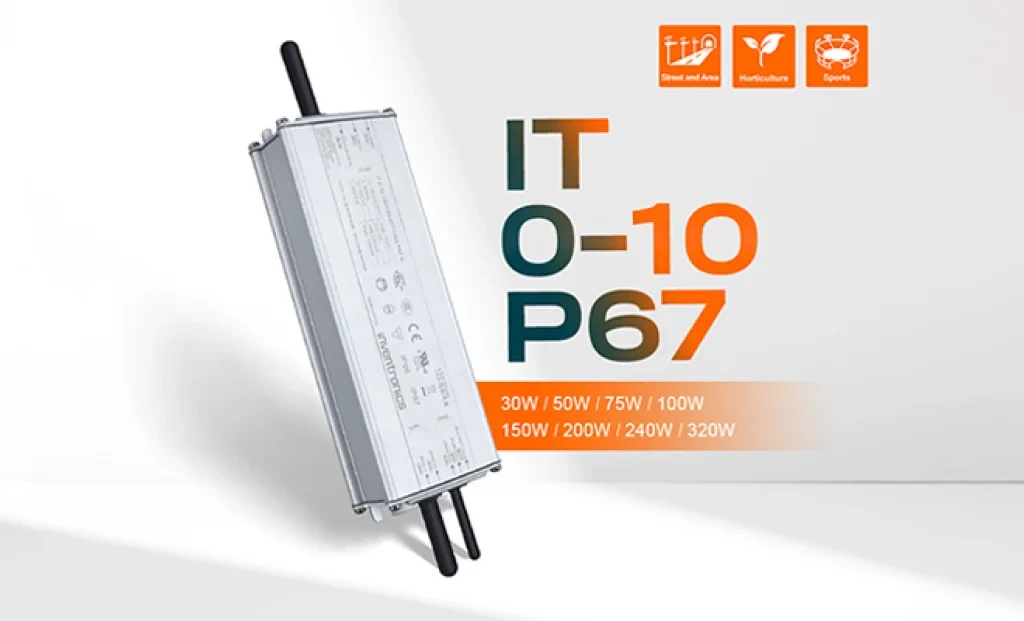
Inventronics has announced two new additions to its outdoor LED driver portfolio: the 150W IT 0-10 150/100-277 P67 and the 240W IT 0-10 240/100-277 P67 programmable drivers. With this new series, the company aims to establish a new benchmark in street and area lighting in terms of performance, efficiency, and durability.
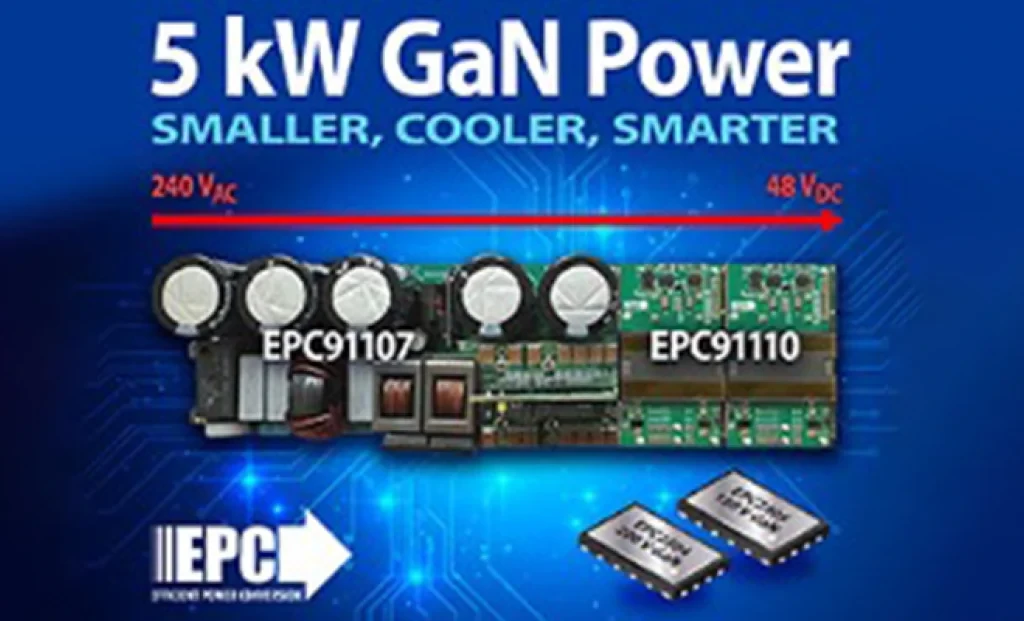
5 kW GaN-Based AC/DC Reference Design from EPC for AI Servers and Data Centers EL SEGUNDO, California — October 2025 — Efficient Power Conversion Corporation (EPC), the world leader in enhancement-mode gallium nitride (eGaN®) power devices, has announced a high-efficiency, high-power-density 5 kW AC-to-48 V DC GaN reference design developed to meet the demands of AI servers and next-generation data center power architectures.
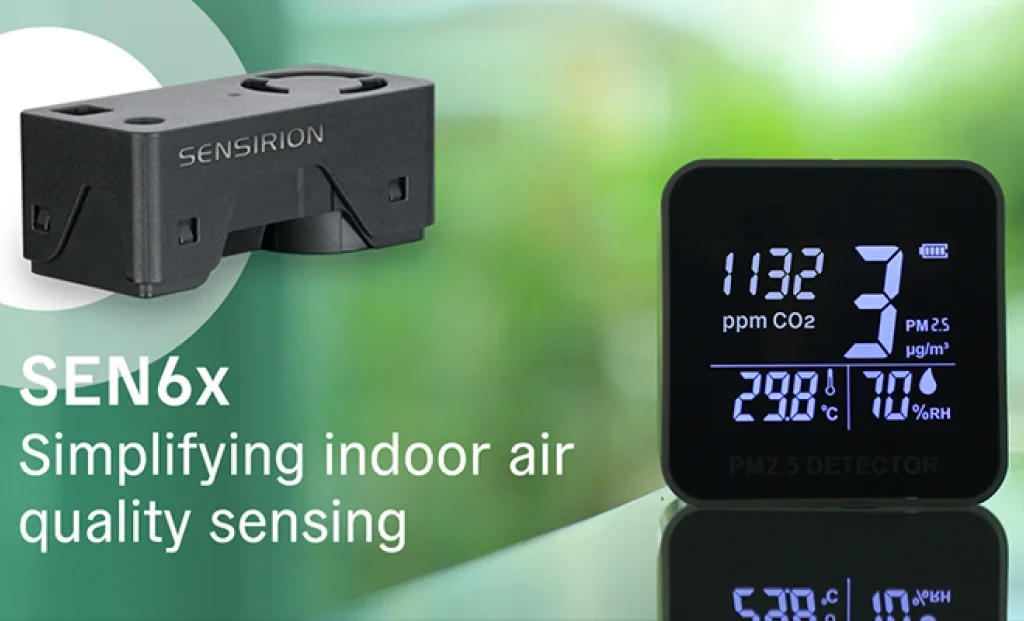
Sensirion has officially announced its next-generation SEN65 and SEN63C sensor platforms, designed to make indoor air quality measurement easier and more accurate than ever before. In addition, the SEK-SEN63C evaluation kit is now available for purchase, enabling developers and system integrators to quickly test and evaluate the new sensor family. Initial orders can be placed immediately.
The long-awaited beta release of Vitis AI 5.1 from AMD has been announced, marking the beginning of a major architectural shift that significantly advances edge AI inference capabilities.
With 44 years of experience, Empa Elektronik, a trusted and pioneering company in the electronic components industry, is set to make transformative investments in the technology ecosystem through its collaboration with Fark Labs, a global innovation and transformation center.
In a comparative study of Auto-ML platforms designed to simplify edge AI deployment, NanoEdge AI Studio and Edge Impulse emerged as leading solutions [1]. The comparison was conducted using multi-sensor biomedical data applied to predictive maintenance use cases.
In shopping malls, galleries, and large-scale commercial spaces, the stability and intelligence of lighting systems are among the most critical factors directly influencing user experience.
 EN − TL
 Türkçe