In the electronics domain, correct identification of resistors plays a crucial role. This is where resistor color codes come into use. Resistor color codes are a fast and practical system for calculating resistance value, tolerance, and temperature coefficient. Resistors used in electrical circuits are specifically designed to control or limit current. However, reading numerical values on small components is not always possible. For this reason, a color-band coding system is used. Resistor color codes not only define the resistance value but also include key parameters such as tolerance and temperature sensitivity. More detailed information about resistor coding, color bands, and resistance calculations can be found in the rest of this article.
What Are Resistor Color Codes?
Resistors on the market are commonly classified as 4-band, 5-band, or 6-band resistors. Resistors with 4 colored stripes are referred to as 4-band resistors, while those containing 5 colored stripes are called 5-band resistors. The system that expresses resistor value using these bands is called the resistor color code. Using the color bands on a resistor, you can calculate the resistance value (in ohms), tolerance (deviation rate), and temperature sensitivity.
How Does Resistor Color Coding Work?
Resistor color coding uses numeric values assigned to each color. These numeric values allow practical calculation. Resistance color code calculation varies depending on the number of bands on the resistor. The numeric values for resistor color codes are:
Color Digit Multiplier Tolerance
Black 0 10^0 (1) ±20%
Brown 1 10^1 ±1%
Red 2 10^2 ±2%
Orange 3 10^3 N/A
Yellow 4 10^4 N/A
Green 5 10^5 ±0.5% (rare)
Blue 6 10^6 ±0.25% (rare)
Violet 7 10^7 ±0.1% (very rare)
Gray 8 10^8 ±0.05% (very rare)
White 9 10^9 N/A
Gold N/A 0.1 ±5%
Silver N/A 0.01 ±10%
Multiplier value is calculated as 10 raised to the power of the digit value of the color. For example, orange corresponds to 10^3 = 1000. Tolerance indicates the deviation margin of the resistor.
How to Calculate a 4-Band Resistor?
The first two bands are placed side-by-side to form a 2-digit number. The third band represents the multiplier. The fourth band defines tolerance.
Formula:
Resistance Value = (2-digit number) × (Multiplier)
Example:
Bands: Yellow (4), Violet (7), Red (10^2 = 100), Green (tolerance ±5%)
Result: 47 × 100 = 4700 ohms (4.7 kΩ)
Tolerance: 5% of 4700 = 235
Tolerance range: 4465 – 4935 ohms
How to Calculate a 5-Band Resistor?
The only difference from a 4-band resistor is that the first three bands form a 3-digit number. The fourth band is the multiplier, and the fifth band is tolerance.
Formula:
Resistance Value = (3-digit number) × (Multiplier)
Example:
First 3 bands: Red (2), Black (0), Black (0) → 200
4th band: Brown (10^1 = 10)
5th band: Silver (±10% tolerance)
Result: 200 × 10 = 2000 ohms (2 kΩ)
Tolerance: 10% of 2000 = 200
Tolerance range: 1800 – 2200 ohms
As stated, standard SMD resistors typically use 3 or 4-digit numeric coding instead of color bands.
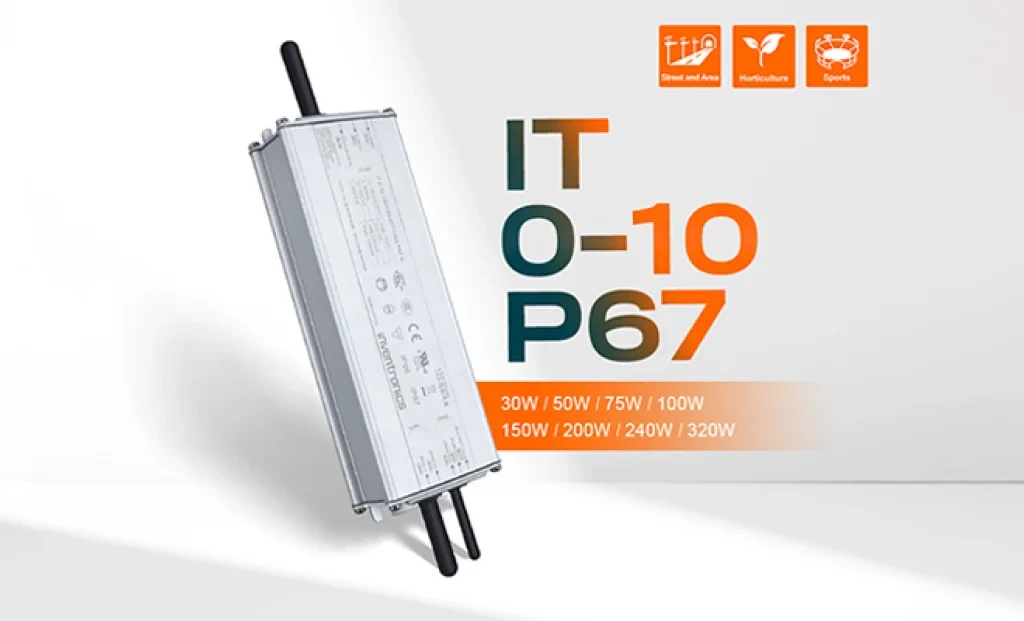
Inventronics has announced two new additions to its outdoor LED driver portfolio: the 150W IT 0-10 150/100-277 P67 and the 240W IT 0-10 240/100-277 P67 programmable drivers. With this new series, the company aims to establish a new benchmark in street and area lighting in terms of performance, efficiency, and durability.
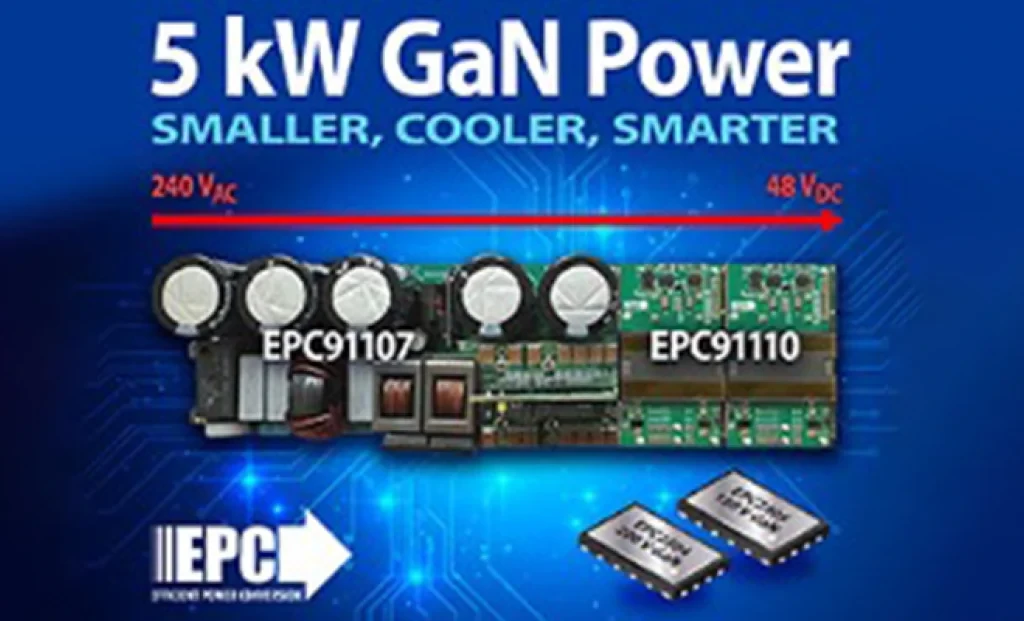
5 kW GaN-Based AC/DC Reference Design from EPC for AI Servers and Data Centers EL SEGUNDO, California — October 2025 — Efficient Power Conversion Corporation (EPC), the world leader in enhancement-mode gallium nitride (eGaN®) power devices, has announced a high-efficiency, high-power-density 5 kW AC-to-48 V DC GaN reference design developed to meet the demands of AI servers and next-generation data center power architectures.
Sensirion has officially announced its next-generation SEN65 and SEN63C sensor platforms, designed to make indoor air quality measurement easier and more accurate than ever before. In addition, the SEK-SEN63C evaluation kit is now available for purchase, enabling developers and system integrators to quickly test and evaluate the new sensor family. Initial orders can be placed immediately.
The long-awaited beta release of Vitis AI 5.1 from AMD has been announced, marking the beginning of a major architectural shift that significantly advances edge AI inference capabilities.
With 44 years of experience, Empa Elektronik, a trusted and pioneering company in the electronic components industry, is set to make transformative investments in the technology ecosystem through its collaboration with Fark Labs, a global innovation and transformation center.
In a comparative study of Auto-ML platforms designed to simplify edge AI deployment, NanoEdge AI Studio and Edge Impulse emerged as leading solutions [1]. The comparison was conducted using multi-sensor biomedical data applied to predictive maintenance use cases.
In shopping malls, galleries, and large-scale commercial spaces, the stability and intelligence of lighting systems are among the most critical factors directly influencing user experience.
 EN − TL
 Türkçe