Electrical energy is an integral part of modern life. However, due to its nature, electricity is highly hazardous and must be used with care. Any imbalance or insulation fault in an electrical circuit can lead to major financial losses, fire hazards, and life-threatening injuries. To prevent such risks, residual current protection relays are used. These devices are commonly referred to as:
Residual-Current Circuit Breaker (RCCB)
Residual Current Device (RCD)
Residual-Current Circuit Breaker (RCCB)
Residual-Current Circuit Breaker (RCCB)
Although visually similar to standard fuses, residual current relays operate on a different and far more sensitive protection principle. Their main role is to detect current leakage to ground by continuously comparing phase (line) and neutral return currents.
When the currents flowing through phase and neutral are not equal in magnitude and direction, the device interprets this as earth leakage and interrupts the circuit within milliseconds. Unlike fuses, which respond only to thermal over-current, an RCD/RCCB can detect very small leakage values — including 30 mA or below, which is the threshold considered safe for human protection.
What Does a Residual Current Relay Do?
An RCCB/RCD:
Detects electrical leakage currents before they reach hazardous levels
Interrupts power rapidly to protect humans, equipment, and electrical installations
Prevents electric shock injuries, fire hazards, insulation damage, and uncontrolled current paths
Is vital for machines, consumer electronics, industrial panels, and building installations
Because the human body can suffer serious injury at 30 mA and above, 30 mA-sensitive relays are especially recommended for homes and offices. These relays protect not only people, but also motors, machines, and electrical appliances, and they significantly reduce the risk of electrical-origin fires.
What Are the Types of Residual Current Relays?
Residual current relays are classified based on:
1. Pole Count
Type Usage
2-Pole RCCB (Single-Phase + Neutral) Used in single-phase installations
4-Pole RCCB (3-Phase + Neutral) Used in 3-phase industrial or building installations
2. Current Sensitivity
Sensitivity Purpose
10 mA Ultra-sensitive personal protection
30 mA Standard human safety protection (homes/offices)
300 mA / 500 mA Fire and equipment protection, not primary personal safety
3. Supported Current Type
Type Function
AC Type Protects AC sinusoidal leakage currents only
A Type Protects AC + pulsating DC leakage currents
B Type Protects AC + DC + fault currents, suitable for EV chargers, industrial drives, SMPS, motor drivers, inverters, e-mobility systems
F Type Provides protection inside electronic equipment, similar to A type, optimized for frequency-controlled loads
Each type has its own standardized symbol printed on the device body.
How Does a Residual Current Relay Work?
An RCCB uses a toroidal transformer (core balance current transformer) to compare phase and neutral currents:
Phase and neutral conductors pass through a toroid core
Under normal conditions, magnetic fields cancel each other, and no current is induced in the sensing coil
If leakage occurs, the magnetic field becomes unbalanced
The imbalance induces current in the search/sense coil
The relay then trips and cuts the circuit rapidly
This makes RCD/RCCB devices extremely effective in shock prevention and fast isolation automation.
How to Wire a Residual Current Relay?
Connection principles:
All 3 phases and neutral must be connected to the relay in 3-phase systems
The relay must not be connected to the earth/ground conductor
Wiring must strictly follow manufacturer terminal and pinout guides
Why Does an RCCB Trip Frequently?
If an RCCB trips repeatedly, this usually indicates:
Current imbalance due to leakage to ground
Damaged insulation
Faulty installation or wiring
Over-load switching surges
Multiple device leakage
Storm or lightning induced surges
To diagnose:
Unplug the last used device
Reset power
If unresolved, disconnect all loads
Re-energize
If the issue persists, consult a qualified electrical engineer or technician
How to Test an RCCB/RCD?
Use the TEST (T) button on the device body
Recommended test cycle: every 3 months
If the relay does not respond when tested, it may be faulty and require replacement
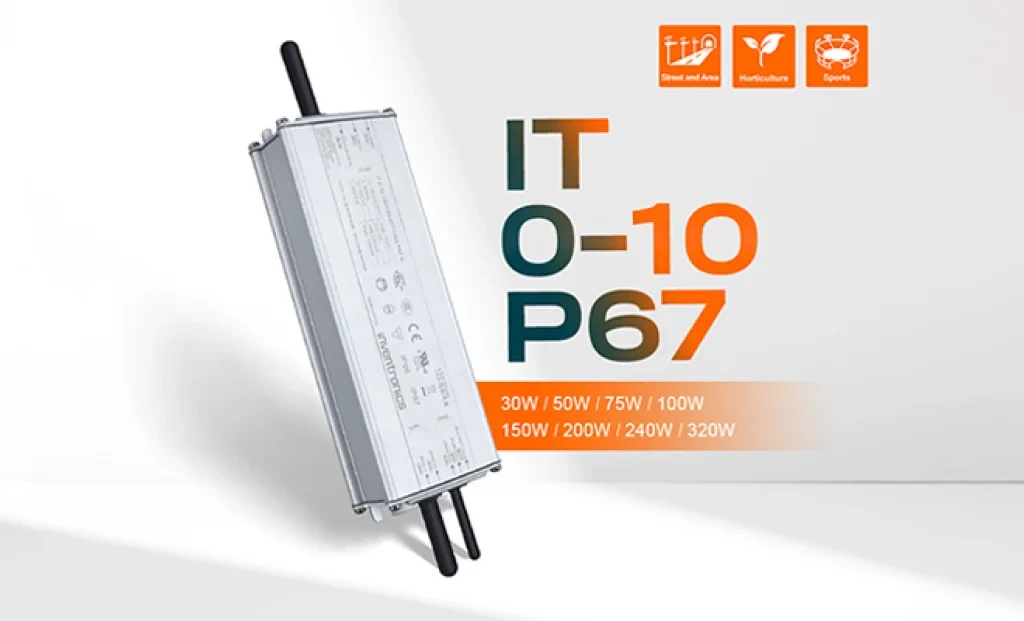
Inventronics has announced two new additions to its outdoor LED driver portfolio: the 150W IT 0-10 150/100-277 P67 and the 240W IT 0-10 240/100-277 P67 programmable drivers. With this new series, the company aims to establish a new benchmark in street and area lighting in terms of performance, efficiency, and durability.
5 kW GaN-Based AC/DC Reference Design from EPC for AI Servers and Data Centers EL SEGUNDO, California — October 2025 — Efficient Power Conversion Corporation (EPC), the world leader in enhancement-mode gallium nitride (eGaN®) power devices, has announced a high-efficiency, high-power-density 5 kW AC-to-48 V DC GaN reference design developed to meet the demands of AI servers and next-generation data center power architectures.
Sensirion has officially announced its next-generation SEN65 and SEN63C sensor platforms, designed to make indoor air quality measurement easier and more accurate than ever before. In addition, the SEK-SEN63C evaluation kit is now available for purchase, enabling developers and system integrators to quickly test and evaluate the new sensor family. Initial orders can be placed immediately.
The long-awaited beta release of Vitis AI 5.1 from AMD has been announced, marking the beginning of a major architectural shift that significantly advances edge AI inference capabilities.
With 44 years of experience, Empa Elektronik, a trusted and pioneering company in the electronic components industry, is set to make transformative investments in the technology ecosystem through its collaboration with Fark Labs, a global innovation and transformation center.
In a comparative study of Auto-ML platforms designed to simplify edge AI deployment, NanoEdge AI Studio and Edge Impulse emerged as leading solutions [1]. The comparison was conducted using multi-sensor biomedical data applied to predictive maintenance use cases.
In shopping malls, galleries, and large-scale commercial spaces, the stability and intelligence of lighting systems are among the most critical factors directly influencing user experience.
 EN − TL
 Türkçe