A potentiometer is an electronic component used to control voltage by adjusting electrical resistance. Its variable resistance allows the user to regulate current, making it ideal for applications such as audio volume control, light dimming, and analog input interfaces.
What Does a Potentiometer Do?
Potentiometers are widely used in electronic circuits as a voltage divider. They can adjust the sound level in audio devices and control the brightness of LEDs. They also function as a physical input element in user interfaces for analog signal control.
How Does a Potentiometer Work?
A potentiometer changes resistance using a mechanically moving slider or rotary knob. While the total resistance between the two outer legs remains constant, the voltage between the middle leg (wiper) and one outer leg varies, providing a controllable analog output.
How to Connect a Potentiometer
Potentiometers typically use three terminals:
One for input voltage (VCC)
One for ground (GND)
The middle terminal (wiper) for adjustable output voltage
This structure enables conversion from a fixed input voltage to a user-adjustable analog output.
Types of Potentiometers
Linear potentiometer: Resistance changes proportionally to the slider position.
Digital potentiometer: Programmable resistance controlled by microcontrollers.
Multi-turn potentiometer: Allows multiple full rotations for precision tuning.
Slide potentiometer: Uses a sliding mechanism to adjust resistance.
What Is a 10k Potentiometer?
A 10k potentiometer has a maximum resistance of 10,000 ohms (10kΩ). It is a popular option for general electronic projects due to its balanced range for voltage and current control.
Motor Driver Connection for Speed Control
A potentiometer can be connected to a motor driver for speed regulation. Typically, the middle leg and one outer leg are connected to the driver’s speed control input, enabling smooth manual speed adjustment.
Potentiometer Control: LED and Servo Motor
Potentiometers can be used to:
Dim LED brightness by changing current flow
Control servo position by modifying analog voltage input, which alters the motor angle.
Price and Selection Criteria
Potentiometer cost depends on:
Resistance rating (5k, 10k, 50k, 100k, 500k, etc.)
Type (linear, digital, slide, multi-turn)
Additional features (switch-integrated, button-integrated, extended rotation like 900°)
Choosing the correct potentiometer requires matching these parameters to the project’s electrical and mechanical needs.
Summary
Potentiometers are fundamental components that provide flexible manual or programmable analog control in electronic systems. Their wide variety and applications make them suitable for both precision engineering and rapid manual tuning use cases.
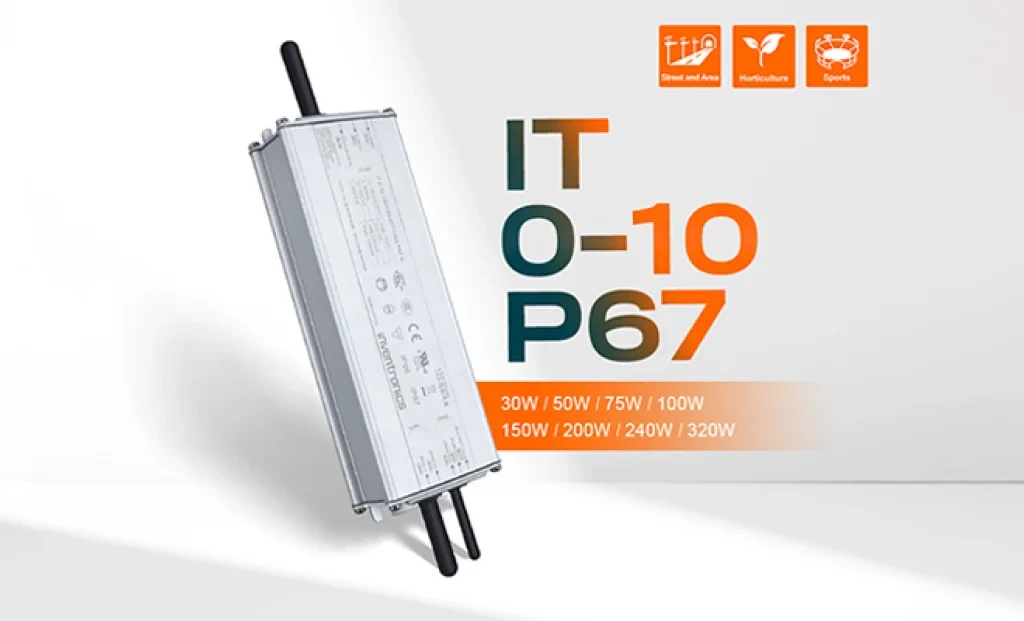
Inventronics has announced two new additions to its outdoor LED driver portfolio: the 150W IT 0-10 150/100-277 P67 and the 240W IT 0-10 240/100-277 P67 programmable drivers. With this new series, the company aims to establish a new benchmark in street and area lighting in terms of performance, efficiency, and durability.
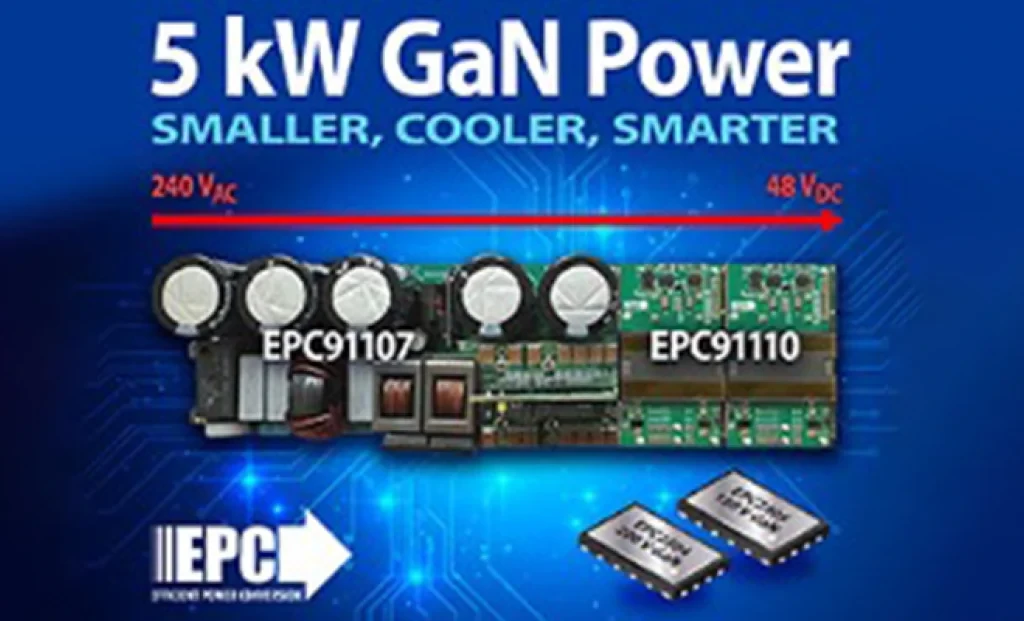
5 kW GaN-Based AC/DC Reference Design from EPC for AI Servers and Data Centers EL SEGUNDO, California — October 2025 — Efficient Power Conversion Corporation (EPC), the world leader in enhancement-mode gallium nitride (eGaN®) power devices, has announced a high-efficiency, high-power-density 5 kW AC-to-48 V DC GaN reference design developed to meet the demands of AI servers and next-generation data center power architectures.
Sensirion has officially announced its next-generation SEN65 and SEN63C sensor platforms, designed to make indoor air quality measurement easier and more accurate than ever before. In addition, the SEK-SEN63C evaluation kit is now available for purchase, enabling developers and system integrators to quickly test and evaluate the new sensor family. Initial orders can be placed immediately.
The long-awaited beta release of Vitis AI 5.1 from AMD has been announced, marking the beginning of a major architectural shift that significantly advances edge AI inference capabilities.
With 44 years of experience, Empa Elektronik, a trusted and pioneering company in the electronic components industry, is set to make transformative investments in the technology ecosystem through its collaboration with Fark Labs, a global innovation and transformation center.
In a comparative study of Auto-ML platforms designed to simplify edge AI deployment, NanoEdge AI Studio and Edge Impulse emerged as leading solutions [1]. The comparison was conducted using multi-sensor biomedical data applied to predictive maintenance use cases.
In shopping malls, galleries, and large-scale commercial spaces, the stability and intelligence of lighting systems are among the most critical factors directly influencing user experience.
 EN − TL
 Türkçe