A MOSFET is a type of transistor used to switch or amplify electronic signals. The term MOSFET stands for Metal-Oxide Semiconductor Field-Effect Transistor. MOSFETs serve as a cornerstone component in modern electronics, offering high efficiency and fast switching performance. A MOSFET symbol contains four terminals:
Gate
Source
Drain (Note: The original text mistakenly used “Direnç/Direnç = resistance”; the correct terminal name is “Drain” in MOSFET terminology.)
Body (substrate in some symbol representations)
The Gate terminal controls the current flow between Source and Drain. When no voltage is applied to the Gate, the channel remains non-conductive (for enhancement-mode MOSFETs). When appropriate voltage is applied, the channel becomes conductive, allowing current to flow.
What Does a MOSFET Do?
MOSFET driver circuits are used in a wide range of applications—from power management to signal transmission. MOSFET devices can operate in two modes:
Depletion Mode (Normally ON): The channel conducts by default. To turn it OFF, voltage must be applied to the Gate.
Enhancement Mode (Normally OFF): The channel does not conduct by default. To turn it ON, voltage must be applied to the Gate.
N-Channel MOSFETs use electrons as primary carriers and provide higher performance due to their superior mobility. P-Channel MOSFETs use holes (positive carriers) and are typically slower and less efficient than N-Channel models. N-Channel MOSFETs require positive Gate-to-Source voltage to turn ON, while P-Channel MOSFETs require negative Gate-to-Source voltage to turn ON.
MOSFET Working Principle
The MOSFET working principle is based on the electric field generated at the Gate terminal:
When voltage is applied to the Gate, an electric field forms in the channel region.
In N-Channel MOSFETs, positive Gate voltage attracts electrons into the channel, making it conductive and enabling current to flow from Drain to Source.
In P-Channel MOSFETs, negative Gate voltage attracts positive charge carriers (holes) into the channel, making it conductive and enabling current to flow from Source to Drain.
When no voltage is applied to the Gate, the channel closes and stops conduction.
Where Are MOSFETs Used?
MOSFET devices are widely used in:
Automotive electronics
Telecommunications
Consumer electronics
High-frequency switching circuits
Power supply units
Low-voltage motor control circuits
DC-DC converters
Measurement instruments (voltmeter, ohmmeter, multimeter)
How to Measure a MOSFET
MOSFET health and performance checks can be performed using:
Multimeter (Diode Mode): Gate, Drain, and Source terminals are tested for continuity and resistance behavior. Drain-to-Source resistance must differ between ON/OFF states.
Oscilloscope (Dynamic Test): Used to evaluate switching speed and signal response.
Terminal Resistance Check: If Gate-to-Source resistance is abnormally low, MOSFET may be faulty.
Thermal Test: If excessive overheating is detected during operation, MOSFET may be faulty.
MOSFET Types
MOSFET variants are mainly categorized as:
N-Channel MOSFET: Higher current capacity, faster switching, more efficient.
P-Channel MOSFET: Uses holes as carriers, lower switching speed, lower performance compared to N-Channel.
Based on default conduction state:
Depletion Type (Normally ON)
Enhancement Type (Normally OFF) (most commonly used MOSFET type)
MOSFET Pricing
MOSFET driver circuit pricing varies depending on product features, material quality, and supplier. The most suitable, high-quality, and cost-effective MOSFET models can be found at Empa Store, which serves as an official distributor for many global electronics brands in Türkiye. You can review MOSFET price ranges on Empa Store’s online shop and select the best model for your needs and budget.
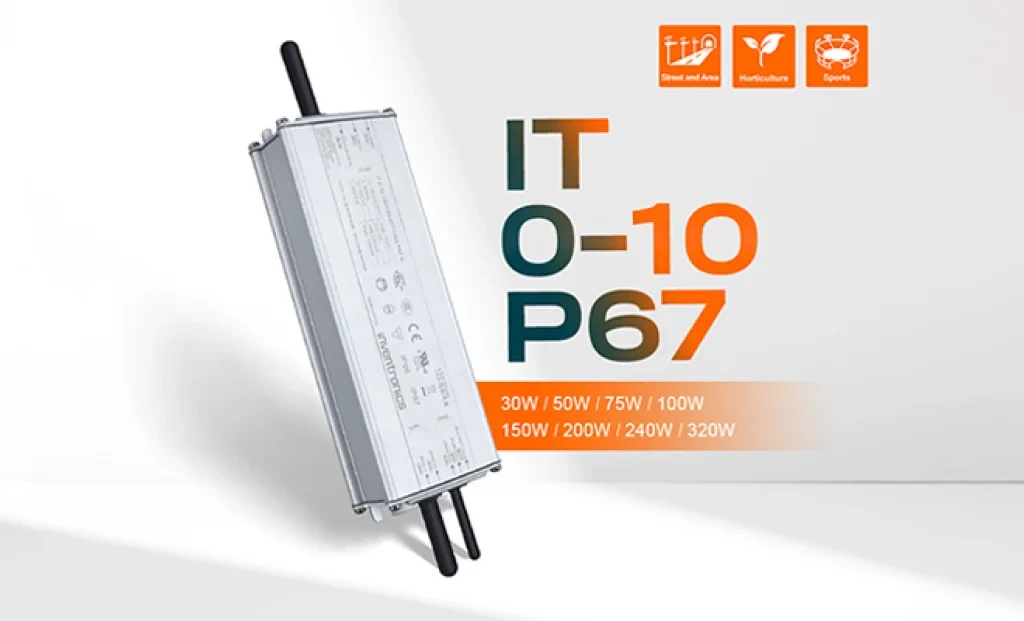
Inventronics has announced two new additions to its outdoor LED driver portfolio: the 150W IT 0-10 150/100-277 P67 and the 240W IT 0-10 240/100-277 P67 programmable drivers. With this new series, the company aims to establish a new benchmark in street and area lighting in terms of performance, efficiency, and durability.
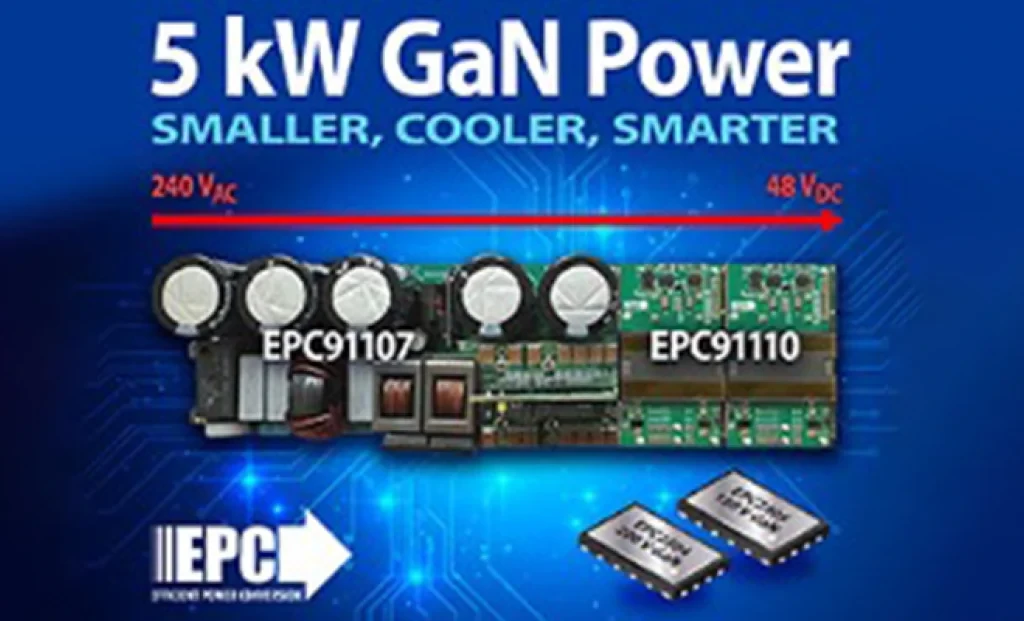
5 kW GaN-Based AC/DC Reference Design from EPC for AI Servers and Data Centers EL SEGUNDO, California — October 2025 — Efficient Power Conversion Corporation (EPC), the world leader in enhancement-mode gallium nitride (eGaN®) power devices, has announced a high-efficiency, high-power-density 5 kW AC-to-48 V DC GaN reference design developed to meet the demands of AI servers and next-generation data center power architectures.
Sensirion has officially announced its next-generation SEN65 and SEN63C sensor platforms, designed to make indoor air quality measurement easier and more accurate than ever before. In addition, the SEK-SEN63C evaluation kit is now available for purchase, enabling developers and system integrators to quickly test and evaluate the new sensor family. Initial orders can be placed immediately.
The long-awaited beta release of Vitis AI 5.1 from AMD has been announced, marking the beginning of a major architectural shift that significantly advances edge AI inference capabilities.
With 44 years of experience, Empa Elektronik, a trusted and pioneering company in the electronic components industry, is set to make transformative investments in the technology ecosystem through its collaboration with Fark Labs, a global innovation and transformation center.
In a comparative study of Auto-ML platforms designed to simplify edge AI deployment, NanoEdge AI Studio and Edge Impulse emerged as leading solutions [1]. The comparison was conducted using multi-sensor biomedical data applied to predictive maintenance use cases.
In shopping malls, galleries, and large-scale commercial spaces, the stability and intelligence of lighting systems are among the most critical factors directly influencing user experience.
 EN − TL
 Türkçe