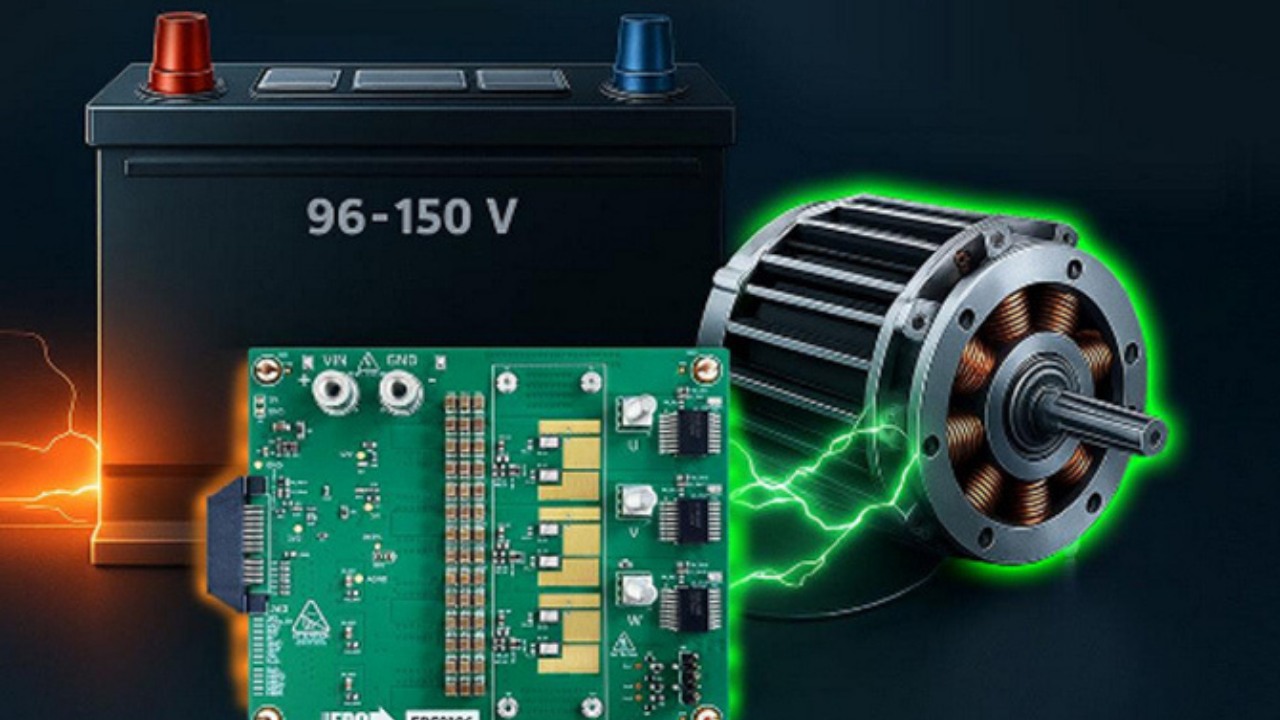
The 96–150 V battery architecture, which is becoming increasingly common in electric mobility systems, is driving new requirements in motor drive design. Applications operating in this voltage range demand fast switching, low conduction losses, and compact solutions with integrated protection and sensing features—capabilities that have traditionally been difficult to combine. EPC addresses this gap with its newly introduced EPC9196 reference design.
EPC9196: High-Performance Inverter Powered by GaN Technology
The EPC9196 is a three-phase BLDC motor driver reference design capable of delivering 25 ARMS output current. This evaluation board is equipped with EPC2304 eGaN® FETs (200 V, 5.0 mΩ max RDS(on)), delivering a combination of high efficiency, fast switching performance, and low EMI. The design specifically targets the following applications:
Steering drive systems in automated guided vehicles (AGVs) and mobile robots
Low- to medium-power actuators and servo mechanisms in industrial robots
Traction motors in light electric vehicles
Technical Specifications and System Architecture
The EPC9196 provides a highly integrated solution, incorporating three half-bridge power stages, gate drivers, current and voltage sensing circuits, and advanced protection features. The system architecture is optimized to deliver high reliability and precise control, which are critical in motor control applications.
Key Technical Features:
Input Voltage Range: 30 V – 170 V
Output Current: 25 ARMS (35 A peak) per phase
Switching Frequency: Up to 150 kHz
dv/dt Control: <10 V/ns (optimized for EMI and acoustic noise reduction)
Current Sensing: Front-end with ACS37003 sensor featuring 400 kHz bandwidth
Voltage and Temperature Monitoring: All phases and DC bus, with integrated AD590 temperature sensor
Ready for Industrial Applications
The EPC9196 is an ideal reference platform for engineers seeking a compact, high-frequency, and highly integrated GaN-based solution. Especially in low-voltage motor control systems, it delivers improved performance through smaller form factor, reduced losses, and lower EMI.
This solution enables faster prototyping and significantly shortens time to production, helping developers accelerate product development cycles.
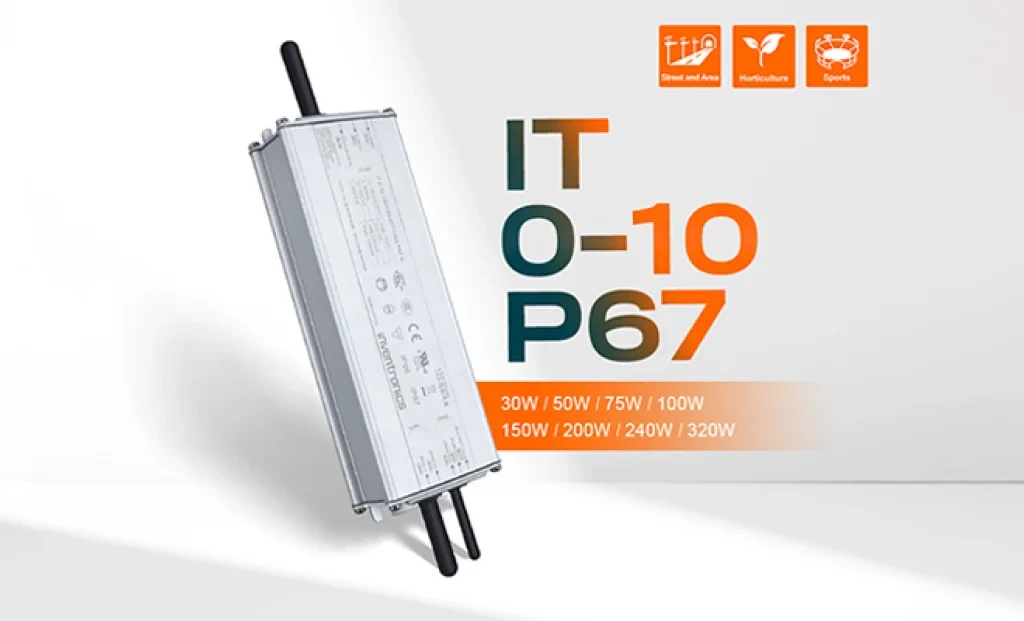
Inventronics has announced two new additions to its outdoor LED driver portfolio: the 150W IT 0-10 150/100-277 P67 and the 240W IT 0-10 240/100-277 P67 programmable drivers. With this new series, the company aims to establish a new benchmark in street and area lighting in terms of performance, efficiency, and durability.
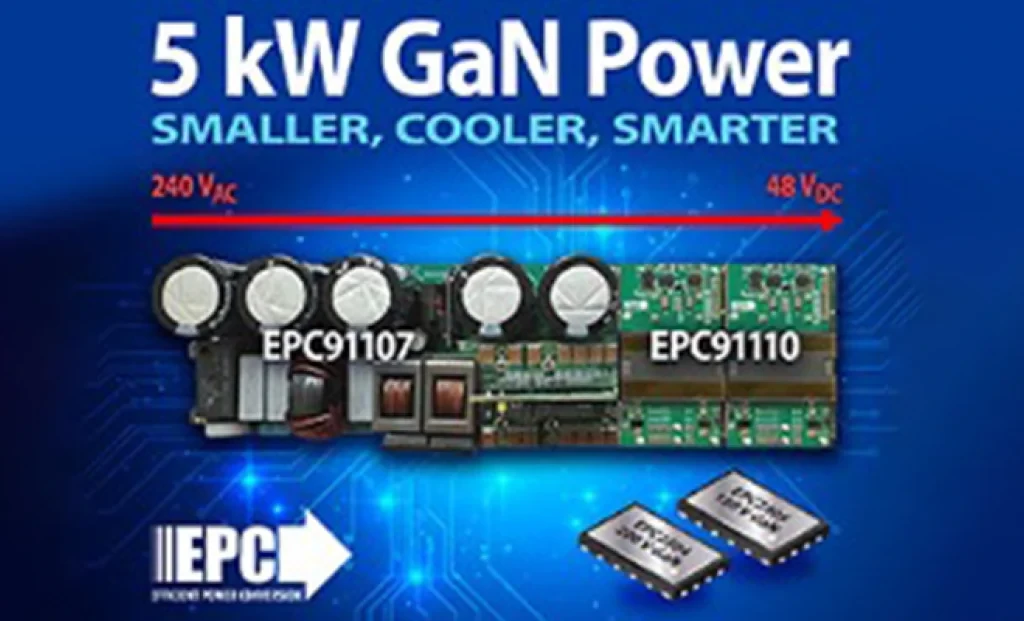
5 kW GaN-Based AC/DC Reference Design from EPC for AI Servers and Data Centers EL SEGUNDO, California — October 2025 — Efficient Power Conversion Corporation (EPC), the world leader in enhancement-mode gallium nitride (eGaN®) power devices, has announced a high-efficiency, high-power-density 5 kW AC-to-48 V DC GaN reference design developed to meet the demands of AI servers and next-generation data center power architectures.
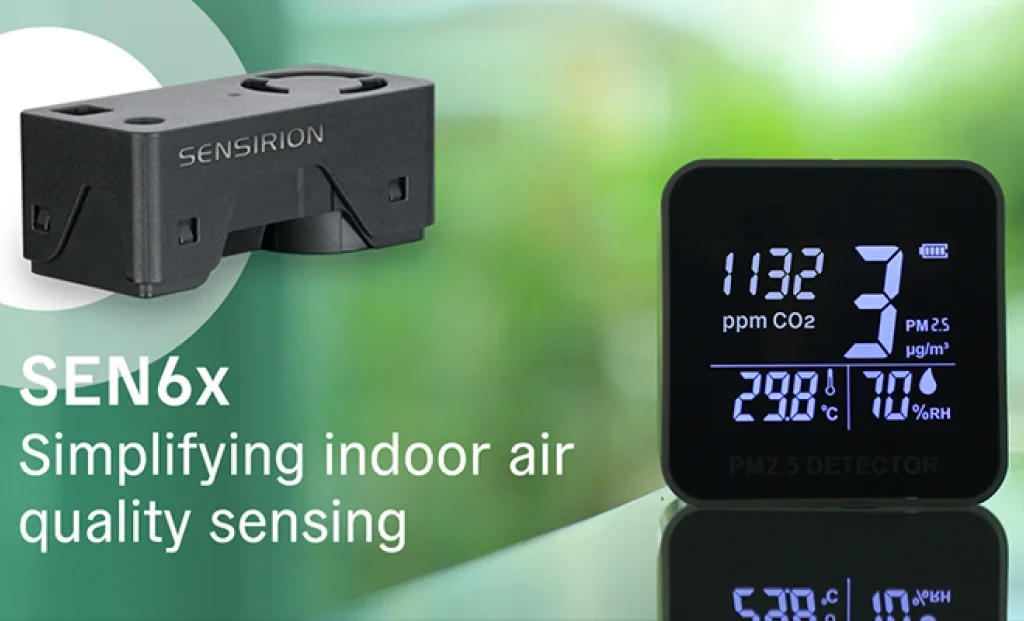
Sensirion has officially announced its next-generation SEN65 and SEN63C sensor platforms, designed to make indoor air quality measurement easier and more accurate than ever before. In addition, the SEK-SEN63C evaluation kit is now available for purchase, enabling developers and system integrators to quickly test and evaluate the new sensor family. Initial orders can be placed immediately.
The long-awaited beta release of Vitis AI 5.1 from AMD has been announced, marking the beginning of a major architectural shift that significantly advances edge AI inference capabilities.
With 44 years of experience, Empa Elektronik, a trusted and pioneering company in the electronic components industry, is set to make transformative investments in the technology ecosystem through its collaboration with Fark Labs, a global innovation and transformation center.
In a comparative study of Auto-ML platforms designed to simplify edge AI deployment, NanoEdge AI Studio and Edge Impulse emerged as leading solutions [1]. The comparison was conducted using multi-sensor biomedical data applied to predictive maintenance use cases.
In shopping malls, galleries, and large-scale commercial spaces, the stability and intelligence of lighting systems are among the most critical factors directly influencing user experience.
 EN − TL
 Türkçe