An encoder is a signal-generating electromechanical sensor that produces digital electrical output signals based on the rotational or linear movement of a shaft or spindle. Encoders transmit feedback signals to determine count, position, speed, or direction. Encoder types use mechanical, optical, magnetic, or resistive sensing systems to generate signals, resulting in multiple sub-categories based on sensing technology and application needs.
What Does an Encoder Do?
Encoders support precision-controlled machines by tracking motion and converting shaft movement, angular position, and axis orientation into digital or analog electrical codes. They enable automation and provide high-accuracy motion control. Encoder devices are commonly used with servo motors, industrial robots, CNC machines, motion cameras, motor control systems, and industrial automation applications.
What Does an Encoder Mean?
An encoder is an electromechanical feedback device that generates digital electrical signals corresponding to the motion of a connected motor shaft. Encoder units deliver motion and position data to support precise machine control.
Where Are Encoders Used?
Encoders are widely used across multiple sectors, including:
Industrial automation: CNC machines, industrial robots, and automated production lines rely on encoder feedback for precision and sequencing.
Automotive: Encoder usage has gained additional importance with the growth of electric vehicles, especially in motor control and speed-sensing systems.
Healthcare: Medical imaging systems, wheelchairs, and precision pumps use encoder technology to increase motion accuracy and device sensitivity.
Robotics: Encoders provide core motion-tracking feedback for robots, supporting high-precision movement control.
Computing systems: Encoders contribute significantly to maintaining high-performance, responsive, and accurately controlled electromechanical operations in modern computing-supported automation systems.
What Are the Main Encoder Types?
Encoders are classified based on technology and motion-tracking principle:
Optical encoders: Use light-based patterns on discs or bands to detect position. These models are extremely precise.
Magnetic encoders: Use magnetic fields to detect position. These models are highly resistant to dust, water, and external industrial conditions.
Hall Effect encoders: Use the Hall Effect principle, where current-carrying materials produce magnetic fields that cause voltage changes. Used to detect motor speed and direction.
Incremental encoders: Generate rapid pulse feedback based on motion from a reference point. They require a reference position at startup.
Absolute encoders: Generate unique codes for each position and retain the last known position even during power loss, supporting fast restarts and high durability.
Key Considerations When Selecting an Encoder
For optimal performance, encoder selection should consider:
Pulse count / resolution
Electrical specifications: supply voltage, output voltage, reference signal amplitude, output electronics type, and auxiliary outputs
Frequency response / bandwidth
Physical specifications: body diameter, body length, shaft or hollow-shaft diameter, depth, flange type, and mounting hole alignment
How Does an Encoder Work?
Encoders track either rotational or linear motion. Optical encoders use a light source and photodetector to detect position via optical patterns on a rotating disc or linear band. Magnetic encoders detect motion position via magnetic field variations between a rotating magnet or magnetic strip and sensors. Inductive encoders operate based on electromagnetic induction, where coil position changes determine motion feedback. For best results, encoder selection should align with intended use case and environment to ensure efficiency and accuracy.
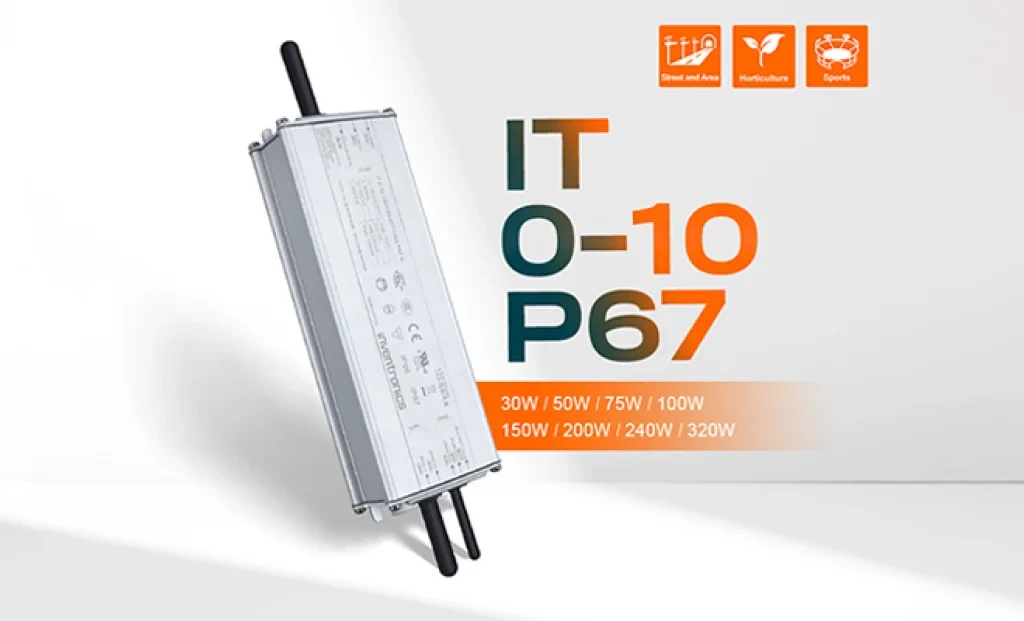
Inventronics has announced two new additions to its outdoor LED driver portfolio: the 150W IT 0-10 150/100-277 P67 and the 240W IT 0-10 240/100-277 P67 programmable drivers. With this new series, the company aims to establish a new benchmark in street and area lighting in terms of performance, efficiency, and durability.
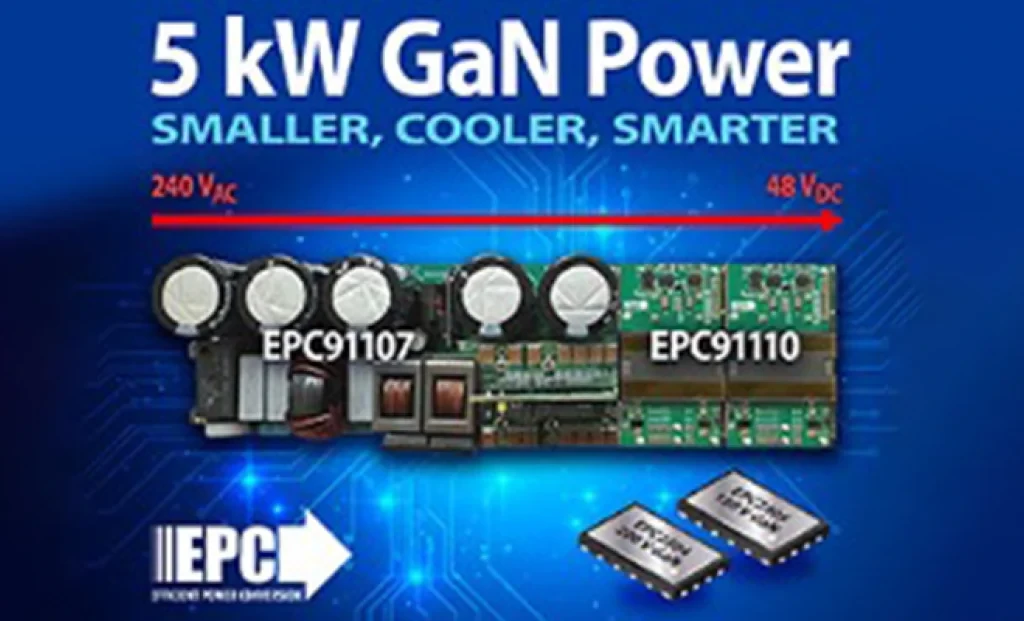
5 kW GaN-Based AC/DC Reference Design from EPC for AI Servers and Data Centers EL SEGUNDO, California — October 2025 — Efficient Power Conversion Corporation (EPC), the world leader in enhancement-mode gallium nitride (eGaN®) power devices, has announced a high-efficiency, high-power-density 5 kW AC-to-48 V DC GaN reference design developed to meet the demands of AI servers and next-generation data center power architectures.
Sensirion has officially announced its next-generation SEN65 and SEN63C sensor platforms, designed to make indoor air quality measurement easier and more accurate than ever before. In addition, the SEK-SEN63C evaluation kit is now available for purchase, enabling developers and system integrators to quickly test and evaluate the new sensor family. Initial orders can be placed immediately.
The long-awaited beta release of Vitis AI 5.1 from AMD has been announced, marking the beginning of a major architectural shift that significantly advances edge AI inference capabilities.
With 44 years of experience, Empa Elektronik, a trusted and pioneering company in the electronic components industry, is set to make transformative investments in the technology ecosystem through its collaboration with Fark Labs, a global innovation and transformation center.
In a comparative study of Auto-ML platforms designed to simplify edge AI deployment, NanoEdge AI Studio and Edge Impulse emerged as leading solutions [1]. The comparison was conducted using multi-sensor biomedical data applied to predictive maintenance use cases.
In shopping malls, galleries, and large-scale commercial spaces, the stability and intelligence of lighting systems are among the most critical factors directly influencing user experience.
 EN − TL
 Türkçe