As electric vehicle adoption continues to grow globally, AC and DC charging stations serve different user needs, charging architectures, and deployment scenarios. The key difference between AC vs DC charging lies in power conversion location, charging speed, infrastructure cost, grid compatibility, and ideal use case environments.
AC Charging Stations (Alternating Current)
AC charging delivers electricity from the grid to the vehicle, where it is converted to DC by the car’s On-Board Charger (OBC) before being stored in the battery.
AC Charging Duration
Typical full charge time: 6 to 12 hours, depending on battery size and OBC capacity.
Charging power is limited by the vehicle’s internal converter, making AC slower than DC fast charging.
How AC Charging Works
Power flows from the grid into the car.
The vehicle’s OBC converts AC to DC, so no external high-power converter is needed at the charging point.
AC Advantages
Lower installation and maintenance cost
Suitable for home, office, hotels, museums, retail parking lots
Often includes remote management, smart scheduling, mobile app integration
No high-power rectifier hardware required on-site
AC Disadvantages
Slower charging speed due to OBC conversion limits
Not ideal for high-traffic, rapid-turnaround charging points
Dependent on vehicle’s internal charging hardware efficiency
DC Charging Stations (Direct Current – Fast Charging)
DC fast charging converts AC from the grid into DC inside the charging station, delivering power directly to the vehicle battery without OBC conversion, enabling much faster charging.
DC Charging Duration
Typical charge time: 15 to 40 minutes to reach 70–80% battery level (varies by station power and vehicle acceptance rate)
How DC Charging Works
AC power is converted to DC externally in the station
DC power is sent directly to the EV battery
Since conversion happens outside the car, DC enables high-speed charging
DC Advantages
Much faster charging than AC
Ideal for public stations, highways, fuel station hubs, fleet depots
Better for long-distance travel and high vehicle turnover locations
Higher energy transfer efficiency in fast-charge cycles
DC Disadvantages
Higher infrastructure and installation cost
Requires stronger grid connection, cooling systems, high-power rectifiers
Can lead to higher operational costs
Not cost-effective for low-usage individual installations
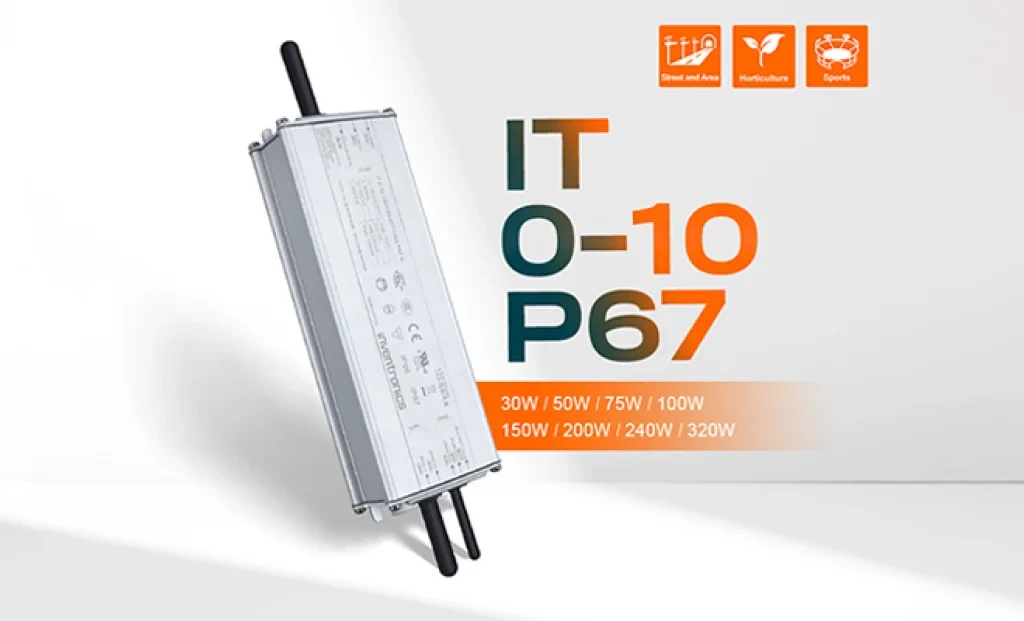
Inventronics has announced two new additions to its outdoor LED driver portfolio: the 150W IT 0-10 150/100-277 P67 and the 240W IT 0-10 240/100-277 P67 programmable drivers. With this new series, the company aims to establish a new benchmark in street and area lighting in terms of performance, efficiency, and durability.
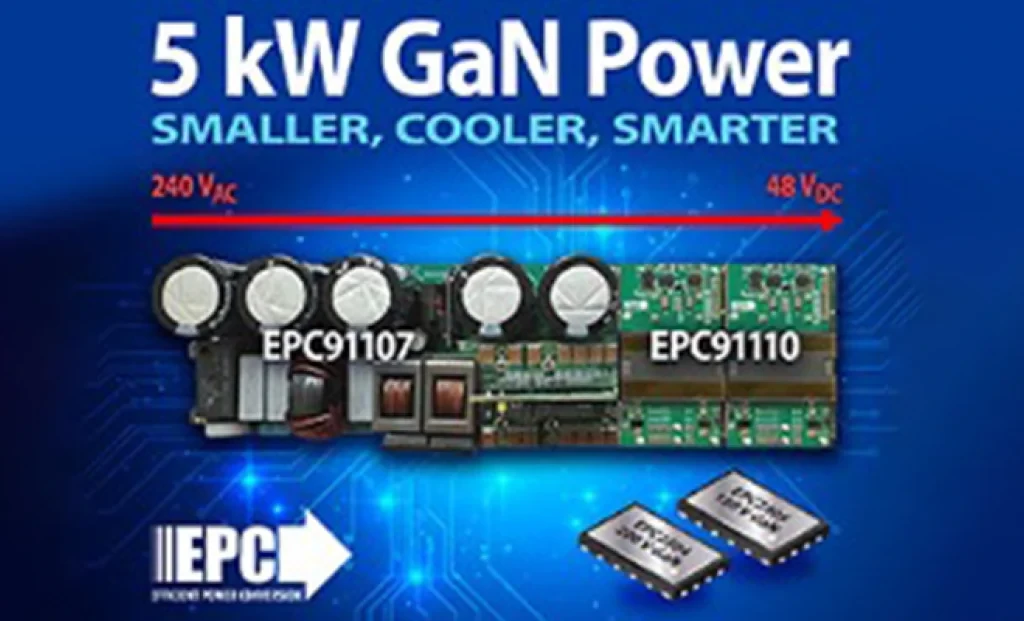
5 kW GaN-Based AC/DC Reference Design from EPC for AI Servers and Data Centers EL SEGUNDO, California — October 2025 — Efficient Power Conversion Corporation (EPC), the world leader in enhancement-mode gallium nitride (eGaN®) power devices, has announced a high-efficiency, high-power-density 5 kW AC-to-48 V DC GaN reference design developed to meet the demands of AI servers and next-generation data center power architectures.
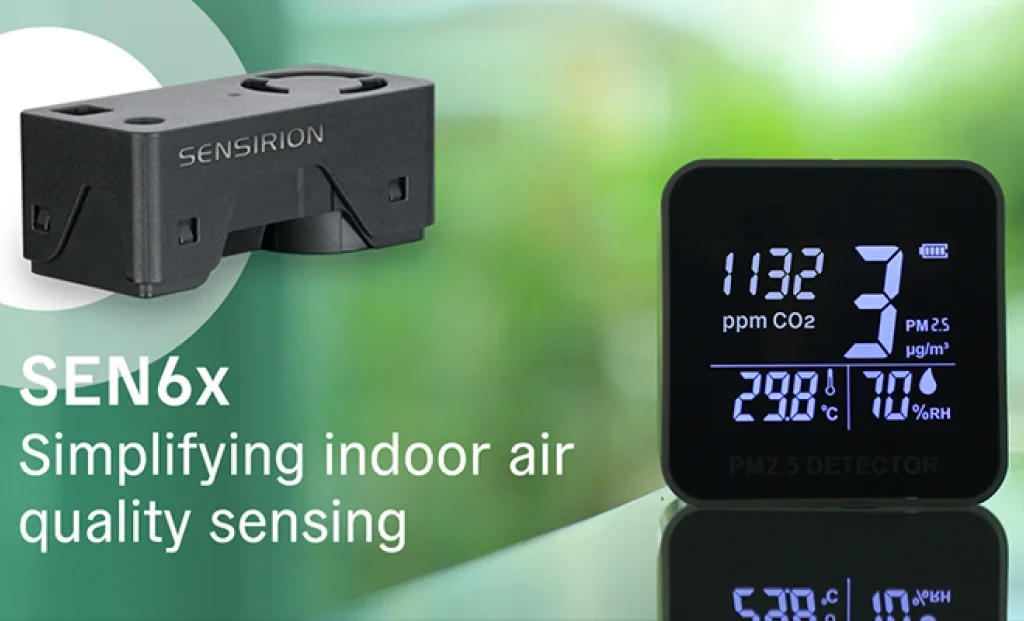
Sensirion has officially announced its next-generation SEN65 and SEN63C sensor platforms, designed to make indoor air quality measurement easier and more accurate than ever before. In addition, the SEK-SEN63C evaluation kit is now available for purchase, enabling developers and system integrators to quickly test and evaluate the new sensor family. Initial orders can be placed immediately.
The long-awaited beta release of Vitis AI 5.1 from AMD has been announced, marking the beginning of a major architectural shift that significantly advances edge AI inference capabilities.
With 44 years of experience, Empa Elektronik, a trusted and pioneering company in the electronic components industry, is set to make transformative investments in the technology ecosystem through its collaboration with Fark Labs, a global innovation and transformation center.
In a comparative study of Auto-ML platforms designed to simplify edge AI deployment, NanoEdge AI Studio and Edge Impulse emerged as leading solutions [1]. The comparison was conducted using multi-sensor biomedical data applied to predictive maintenance use cases.
In shopping malls, galleries, and large-scale commercial spaces, the stability and intelligence of lighting systems are among the most critical factors directly influencing user experience.
 EN − TL
 Türkçe